NMPA China Medical Device Registration & Approval
Last reviewed:
China, with its rapidly aging population, stands as one of the leading medical device markets globally. The country's long-term health governance plans aim to expand healthcare services and financial coverage, predicting a significant rise in healthcare expenditure in the years ahead.
This growth presents substantial opportunities for medical device companies looking to obtain NMPA China medical device registration and approval.

Understanding Device Classifications and Regulatory Requirements in China
Medical devices and in vitro diagnostics in China are regulated by the National Medical Products Administration (NMPA). Provincial authorities participate in some lower-risk filings and local oversight, while NMPA handles the national registration framework. Current regulations, notices, and guidance are available through the NMPA medical devices portal.
China medical device classification
China uses three risk classes. Class I covers lower-risk products and generally follows a filing route. Class II and Class III products generally require registration, with the evidence and review depth increasing with risk. Classification should be confirmed against the Chinese classification catalogue and rules; a US or EU class is useful background but does not determine the Chinese result.
Software, AI-enabled devices, combination products, innovative technologies, and IVDs may trigger product-specific classification and evidence questions. A careful intended-use statement and product boundary analysis should be completed before testing or dossier preparation because they drive standards, clinical evaluation, and labeling.
Domestic agent and registration evidence
An overseas applicant appoints a China-based agent to manage regulatory communications and specified lifecycle responsibilities. The agreement should address dossier access, supplemental questions, change reporting, renewal, complaints, adverse events, recalls, and transfer planning.
A registration file typically includes administrative and manufacturer information, product technical requirements, risk management, research and verification reports, applicable standards, inspection or testing evidence, clinical evaluation, labeling and instructions for use in Chinese, and quality-system information. Whether local testing, exemption pathways, or overseas reports can be used depends on the device and current NMPA rules. Class I filing still requires a technically complete package even though it is not reviewed like a Class II or III registration.
Review, labeling, and lifecycle
NMPA may issue supplemental-information requests during technical review. Project plans should reserve time for testing, translation, legalized documents where applicable, and consistent responses across the dossier. Approved product names, models, specifications, manufacturing sites, intended use, and labels must stay aligned.
After market entry, the manufacturer and agent need procedures for complaints, adverse-event monitoring, corrective actions, recalls, and regulatory reporting. Changes should be assessed before implementation to determine whether they require a change registration, notification, new filing, or documentation in the quality system. Registration renewal work should begin early enough to preserve continuity of supply.
 Regulatory Update · Sep 5, 2026China Device GMP: 1 Nov 2026Regulatory Update · Jul 1, 2026Malaysia-China Joint Evaluation Pilot Programme 2026Regulatory Update · May 12, 2026Singapore China Health Products MOU 2026 Regulatory UpdateRegulatory Update · Aug 5, 2025Malaysia–China Medical Device Reliance Programme Launches Pilot for IVD Fast-Track AccessBlog · Sep 6, 2026One Device, Three UDI DatabasesBlog · Aug 3, 2026ISO 10993-1:2025: One Core, Seven Regulatory SystemsBlog · Jul 27, 2026IVD Global Market Access 2026Blog · Jul 20, 2026Orthopedic Implants: The 2026 Global Market-Access MapVideo · Jul 21, 2025How to Register a Medical Device in ChinaCase Study · Aug 5, 2026Vietnam IVD Registration for an Oncology Assay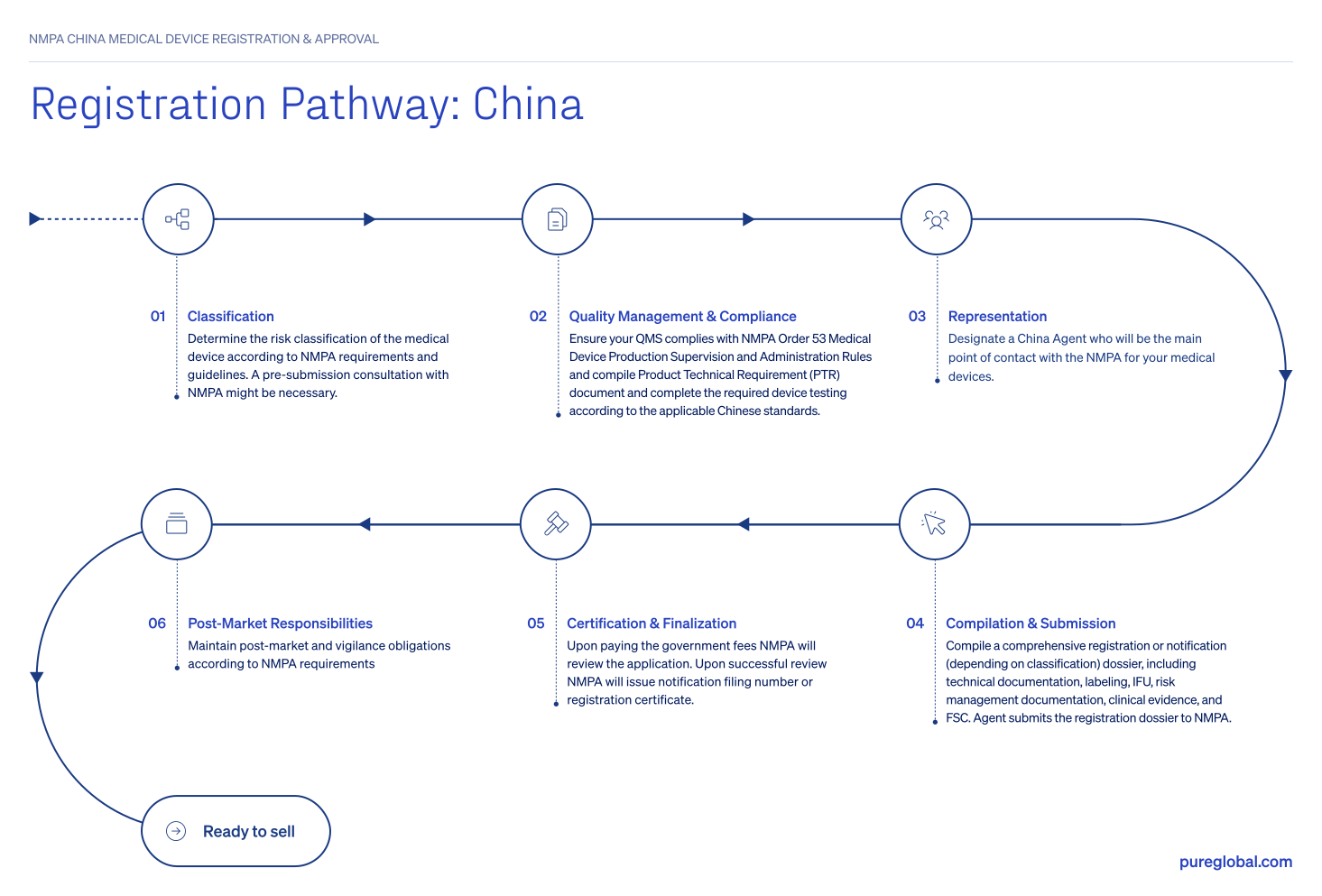
Tailored Support for Market Entry
Our local partner’s expertise in China's medical device market offers you:

Guidance on classifying your products and outlining the regulatory pathway.
Assistance with compiling the regulatory dossier and navigating local testing and clinical study requirements when applicable.
Acting as your China Agent for NMPA registration, ensuring compliance with post market requirements.

Frequently asked questions
The primary regulatory authority for medical device registration in China is the National Medical Products Administration (NMPA). Pure Global can assist with navigating the registration process to ensure NMPA approval for selling medical devices in the Chinese market.
Medical devices in China are classified into Class I, II, and III based on their risk level. Class I devices typically undergo a more straightforward registration process, while Class II and III devices may require local clinical trials and in-country testing, depending on specific conditions such as predicate devices or listing on NMPA China's clinical trial exemption list.
Foreign manufacturers must: Classify their products to determine the regulatory pathway and understand local clinical study and testing requirements. Compile a comprehensive regulatory dossier for submission to the National Medical Product Administration (NMPA), demonstrating compliance with Chinese regulatory standards. For Class II and III devices, conduct local clinical trials unless exemptions apply, such as having exact predicates or being listed on NMPA's clinical trial exemption list.
Having the country of origin's approval is crucial because it demonstrates that the medical device meets regulatory standards in its country of origin. This approval is often a prerequisite for initiating the registration process with NMPA under China medical device regulations, ensuring that the device can legally enter and be marketed in the Chinese market.
Single Process,
Multiple Markets
When you partner with Pure Global, a single registration process opens doors to multiple countries. Our global subsidiaries make this streamlined path possible.










Let's Talk,
Anywhere You Are.
Whether looking for more information or ready to partner with us, we're here to guide you through every step of the regulatory process.
Contact us