MDA Malaysia Medical Device Registration
Last reviewed:
Plan Malaysia medical device and IVD access with the correct local class, product route, eligible applicant, technical evidence and lifecycle controls.
How to register a medical device in Malaysia
Medical device and IVD registration in Malaysia is overseen by the Medical Device Authority (MDA) under the Ministry of Health.
The system is based on the Medical Device Act 2012, Medical Device Authority Act 2012, and Medical Device Regulations 2012. Most devices require a conformity assessment by a Malaysian Conformity Assessment Body (CAB) before registration. Class A devices are exempt from CAB assessment.
Registration applications are submitted through Malaysia’s MeDC@St system, and all devices must comply with labeling and postmarket surveillance obligations to maintain market authorization.
Malaysia medical device classification
Devices are classified into Class A, B, C, and D based on risk. IVDs follow a parallel scheme from Class A through D. Classification determines registration and conformity assessment requirements.
Malaysia MDA device registration process
Determine class and grouping: Apply the Malaysian classification rules. Decide how the device will be grouped (single, family, system, etc.). Class A devices are exempt from CAB review; Class B-D devices and IVDs require verification or full conformity assessment depending on reference country approval.
Compile the technical documentation (CSDT): Prepare the Common Submission Dossier Template with all required technical, clinical, and labeling information.
Undergo conformity assessment with a CAB (Class B/C/D)
Submit the registration application to MDA: The local manufacturer or Authorized Representative submits through MeDC@St and pays the application fee.
MDA reviews the submission: Use the current service target for the route and separate it from CAB assessment, document preparation and applicant responses.
MDA feedback: Reply to MDA feedback within 30 days
Pay registration fee and obtain certificate: On approval, MDA issues the registration certificate.
Other MDA registration requirements:
Authorized Representative: Foreign manufacturers must appoint a Malaysia-based Authorized Representative to hold the registration, manage submissions and renewals, maintain documentation, and coordinate postmarket surveillance activities.
Translation: English is generally required for both labeling and IFU. Bahasa Malaysia is mandatory for home-use devices, and MDA encourages the use of internationally recognized symbols where appropriate.
Renewals: Device registrations are valid for five years. Renewals must be submitted through MeDC@St up to one year before expiration.
Post-market surveillance: Manufacturers must maintain distribution records, complaint handling, adverse event reporting, field corrective actions, and recalls.
Adverse event reporting: Mandatory reporting timelines depend on event severity. Manufacturers must investigate incidents, implement field corrective actions as needed, and submit findings and outcomes to MDA for review.
What regulatory pathways exist for registering medical devices and IVDs in Malaysia?
All devices except Class A require conformity assessment by a CAB. There are two regulatory pathways:
Verification (abridged) review: For devices already approved in the EU, UK, Australia, Canada, Japan, Singapore, Thailand, or the US. These devices undergo a shorter review, provided reference-country evidence is supplied.
Full conformity assessment: Required for devices without reference market approval. This process mirrors an EU notified body assessment and includes technical documentation review, QMS verification, and audit.
Once CAB certification is complete, manufacturers apply for registration through MeDC@St.
Who can act as the Authorized Representative in Malaysia and what do they do?
Foreign manufacturers must appoint a Malaysian Authorized Representative (AR). The AR holds the registration, interacts with MDA, submits applications and modifications, maintains device records, and ensures postmarket surveillance compliance. The AR is also responsible for submitting renewals, reporting adverse events, and coordinating recalls or field corrective actions when necessary.
What is an establishment license and do I need one as a medical device manufacturer?
An establishment license is the MDA’s required operating license for any entity that places medical devices on the Malaysian market. Under the Medical Device Act 2012, only a licensed “establishment” can import, export, manufacture, or distribute a registered device. Establishments include manufacturers, authorized representatives, importers, and distributors.
If you’re a foreign manufacturer, you don’t hold this license yourself unless you have a Malaysian legal entity. You must appoint a local authorized representative that is licensed as an establishment.
Current pathway and launch dependencies
| Workstream | Requirement or decision |
|---|---|
| Class A | CAB exemption does not mean exemption from product registration or technical records |
| Classes B/C/D | Full or eligible verification conformity assessment, then MDA registration |
| Foreign manufacturer | Eligible Malaysia AR and actual establishment-role licences |
| Postmarket | MeDCReSt, change requirements and current reporting notices |
Assess the precise reference approval types under MDA’s current list; verification still involves the applicable CAB and registration work. Class A exemption from CAB assessment is separate from registration. Read current MDA guidance for labels and changes rather than assuming every newly published guidance document is already in force. Use the MeDCReSt notices when evaluating foreign incidents: a historical “report every overseas event” rule should not override current reporting instructions.
Use the official MDA instructions for the precise category, forms, fees and supporting records. Maintain a product-level plan covering evidence gaps, local permissions, filing, authority questions and release. Government charges, certification/audit, translations and service fees are separate; avoid undated currency conversions or a guaranteed approval date. Connect the plan to the market's classification, labeling and postmarket guides below.
 Regulatory Update · Oct 11, 2026MDA Classification Letter ValidityRegulatory Update · Aug 12, 2026Malaysia MDA Hologram Security Label for Medical DevicesRegulatory Update · Jul 21, 2026Malaysia MDA Online Product ClassificationRegulatory Update · Jul 7, 2026Malaysia MeDC@St Automated Re-Registration 2026Blog · Aug 24, 2026Medical Device Registration Verification 2026Blog · May 29, 2026Turn FDA & EU Approvals Into Global Market AccessBlog · Jul 28, 2025Malaysia's Medical Device and IVD MarketBlog · Jan 9, 2025Pure Global Team attends IMDEC 2024 in MalaysiaVideo · Oct 16, 2026Malaysia MDA: Medical Device RegulationVideo · Aug 10, 2025How to Register a Medical Device in Malaysia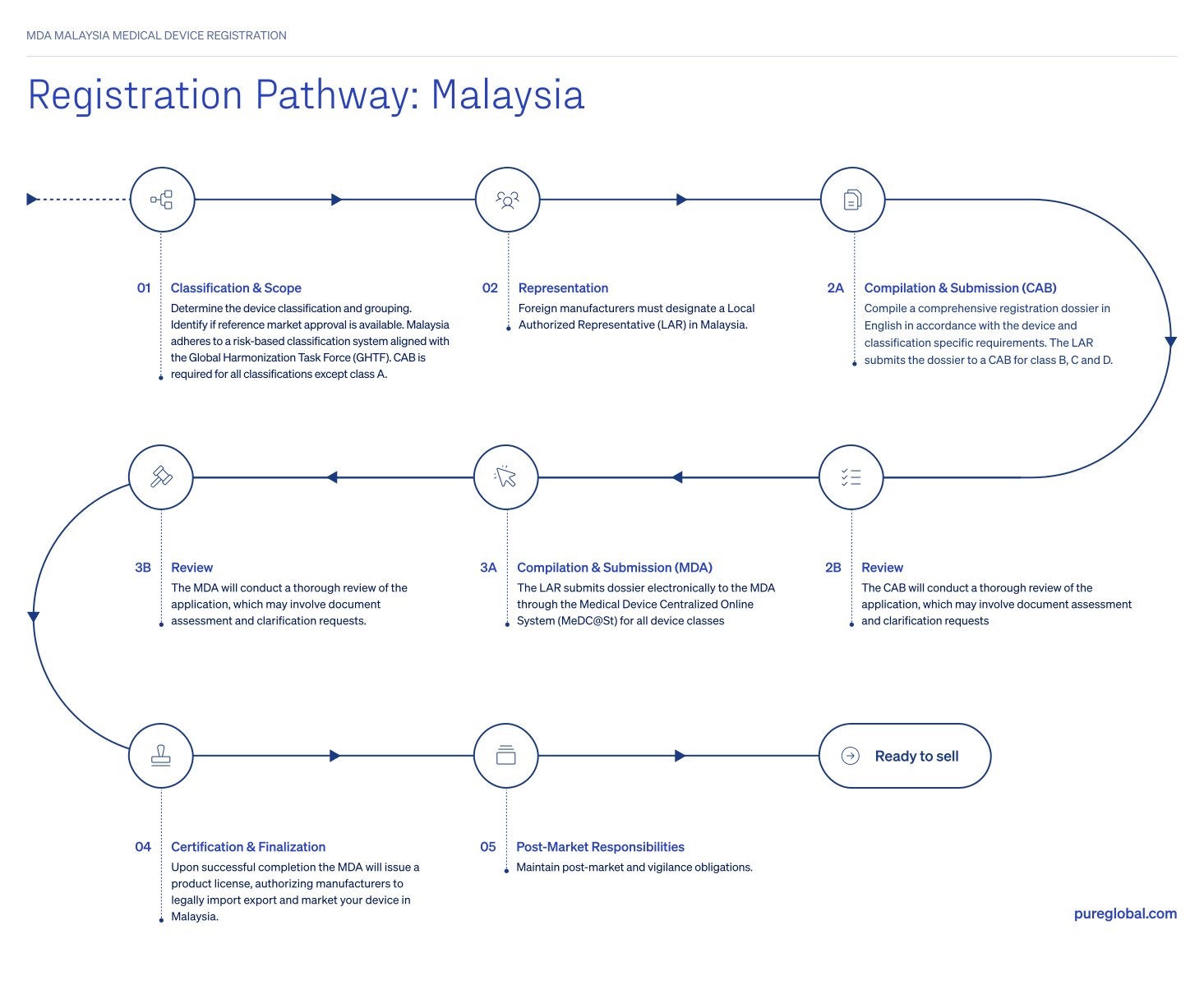
Faster submissions. Predictable costs. Local support.
We provide turnkey regulatory support in Malaysia, all for a flat annual fee:

Dossier preparation and submission, powered by AI assisted workflows and regulatory experts.
In country representation, with Pure Global serving as your Authorized Representative to the MDA.
Post market surveillance support, including vigilance reporting and authority communications.
Importer authorizations, post approval modifications, and renewals.

Frequently asked questions
No. It may support an eligible evidence or evaluation route, but local classification, applicant permissions, product authorization, labeling and lifecycle requirements still apply. Document the specific route and its conditions.
No. Confirm the local company’s permitted activities and the device’s registration, declaration, listing or licence separately. A product record does not automatically authorize every importer or distributor.
Identify the actual route and current official charges, then separately budget evidence, certifications, translation and local services. Separate authority processing from applicant responses and prerequisite work rather than using one universal calendar promise.
Single Process,
Multiple Markets
When you partner with Pure Global, a single registration process opens doors to multiple countries. Our global subsidiaries make this streamlined path possible.










Let's Talk,
Anywhere You Are.
Whether looking for more information or ready to partner with us, we're here to guide you through every step of the regulatory process.
Contact us