PMDA Japan Medical Device Registration & Approval
Last reviewed:
Japan's position as the world’s second-largest medical device market, with a population of over 123 million and approximately 35% of medical devices imported, presents significant opportunities for global manufacturers.
The country's advanced healthcare system and regulatory environment offer a fertile ground for high-quality medical devices seeking PMDA medical device registration.

Understanding Regulatory Classifications in Japan
Japan's medical device system separates scientific review from the legal approval decision. The Pharmaceuticals and Medical Devices Agency (PMDA) performs scientific reviews, consultations, inspections, and post-market safety work, while the Ministry of Health, Labour and Welfare (MHLW) makes approval decisions. Some designated devices are certified by Registered Certification Bodies instead of receiving an MHLW approval. PMDA describes these routes in its official medical device review guidance.
Japan classification and authorization routes
Devices are classified as Class I, II, III, or IV according to risk and assigned a Japanese Medical Device Nomenclature (JMDN) code. Class I devices generally follow a notification route. Many designated Class II and some Class III devices can use third-party certification when an applicable certification standard exists. Other Class II and III devices, and Class IV devices, generally require MHLW approval following PMDA review.
The route therefore cannot be selected from class alone. The JMDN code, general or specified control category, certification standard, novelty, intended use, and claims all matter. Foreign classifications and approvals can support the evidence package but do not replace the Japan-specific route analysis.
MAH and DMAH requirements
A product must be placed on the Japanese market through a licensed Marketing Authorization Holder (MAH). A foreign manufacturer without its own Japanese MAH structure may appoint a Designated Marketing Authorization Holder (DMAH). Generic handler titles are not the correct regulatory role; use MAH or DMAH as applicable.
The MAH or DMAH holds significant quality, safety, vigilance, and authority-communication responsibilities. Agreements should cover dossier access, consultation strategy, change control, renewal or maintenance, complaints, adverse-event reporting, recalls, and transfer planning.
Evidence, QMS, and lifecycle
A submission typically includes the intended use and JMDN basis, device description, risk management, verification and validation, clinical evidence where needed, manufacturing-site information, quality-system evidence, and Japanese labeling. QMS conformity is assessed as part of the authorization framework, with scope and inspection needs depending on the product and sites.
PMDA consultation can reduce uncertainty for novel technology, software, clinical evidence, and nonstandard routes. After authorization, the MAH must maintain quality and post-marketing safety systems, evaluate complaints and adverse events, manage recalls and field actions, and assess changes before implementation. Approved scope, sites, labels, and certificates must remain aligned throughout the product lifecycle.
 Regulatory Update · Jun 17, 2026Malaysia and Japan Sign Medical Device Cooperation AgreementBlog · Aug 24, 2026Medical Device Registration Verification 2026Blog · Aug 17, 2026Coronary Stents: Eight Highest-Tier FilesBlog · Aug 10, 2026Surgical Robots: Eight Markets, Eight Regulatory FilesBlog · Aug 3, 2026ISO 10993-1:2025: One Core, Seven Regulatory SystemsVideo · Sep 11, 2026Japan MHLW and PMDA: Who Does What?Video · Aug 8, 2025How to Register a Medical Device in JapanRegulatory Update · Oct 11, 2026HSA GN-15 R15 Registration UpdatesRegulatory Update · Oct 11, 2026MDA Classification Letter ValidityRegulatory Update · Oct 1, 2026ANVISA–Hong Kong DH Cooperation MoU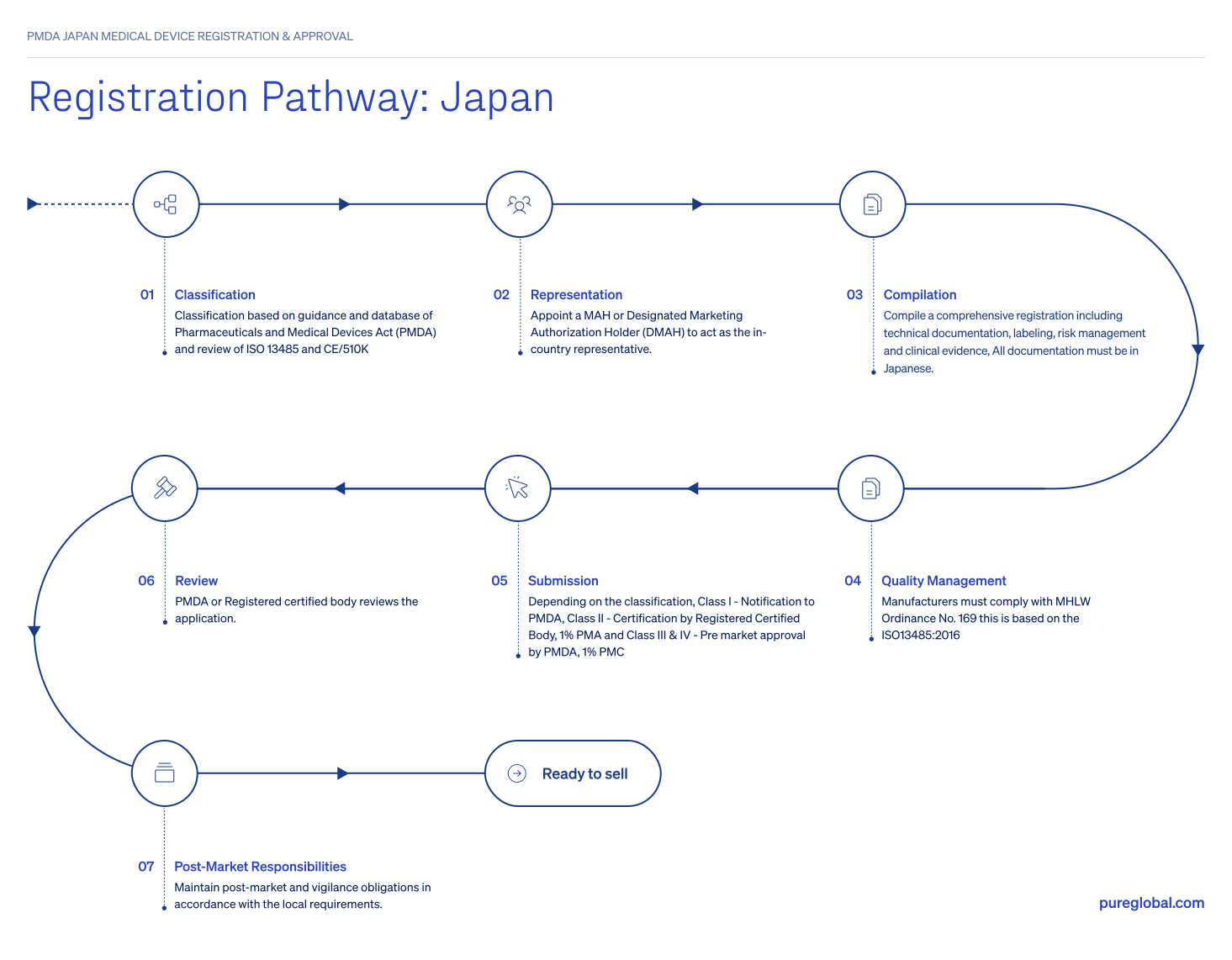
Tailored Support for Market Entry
Leverage our expertise to enter or expand your presence in the Japanese market:

Guidance on classifying your products and determining the appropriate regulatory pathway.
Assistance with compiling the necessary technical dossier for PMDA submission.
Representation as your Designated Marketing Authorization Holder (DMAH) , managing the registration process and ensuring post market compliance.

Frequently asked questions
The Japan Pharmaceuticals and Medical Devices Agency (PMDA) is the regulatory authority responsible for the registration and approval of medical devices in Japan. They oversee the compliance and regulatory requirements for market access.
Medical devices in Japan are classified into four classes (I to IV) based on their risk level. The medical device classification in Japan dictates that Class I devices have the lowest risk and typically require pre-market notification, while higher-risk devices (Class II to IV) require more stringent certification or approval processes.
A product must be marketed through a licensed Japan Marketing Authorization Holder (MAH). A foreign manufacturer without its own Japanese MAH structure may appoint a Designated Marketing Authorization Holder (DMAH). The MAH or DMAH manages the appropriate notification, certification, or MHLW approval route and ongoing QMS and safety duties.
Compliance with Japan's Quality Management System (QMS) regulations is essential for medical device registration. The QMS ensures that manufacturers maintain high standards in their production processes, which is a critical component of the certification or Japan medical device approval process.
Single Process,
Multiple Markets
When you partner with Pure Global, a single registration process opens doors to multiple countries. Our global subsidiaries make this streamlined path possible.









Let's Talk,
Anywhere You Are.
Whether looking for more information or ready to partner with us, we're here to guide you through every step of the regulatory process.
Contact us