MOH Indonesia Medical Device Registration
Last reviewed:
Medical device and IVD registration in Indonesia requires approval from the Indonesian Ministry of Health (MoH). Manufacturers must submit a technical dossier for MoH review and approval, as well as obtain an importer as their in-country representative.
Pure Global simplifies the process with AI workflows that accelerate MoH submission preparation, along with local support and representation, all for a flat annual fee.
How to register a medical device in Indonesia
Medical devices and IVDs sold in Indonesia are regulated by the Ministry of Health (MoH). All devices must obtain market authorization by registering with the MoH and receiving a Product Registration License (NIE). Manufacturers also need a Medical Device Distribution License (IDAK/MDDL). Foreign manufacturers are required to appoint a Local Authorized Representative (LAR) to submit the registration application and maintain regulatory compliance on their behalf.
Indonesia’s regulatory framework follows Regulation No. 62 of 2017, the ASEAN Medical Device Directive (AMDD), and Global Harmonization Task Force (GHTF) guidance. Submissions must follow the ASEAN Common Submission Dossier Template (CSDT) format.
MoH Indonesia medical device regulatory pathway
All medical devices and IVDs must be classified and submitted for registration according to their risk level. Devices are classified into four risk classes: Class A, B, C, and D.
Indonesia Medical Device Registration Process (All classes of medical devices and IVDs)
Process: Applications are submitted via the MoH’s online portal using the ASEAN CSDT format. Devices must have home country approval or authorization in a GHTF member country.
Documentation requirements: A complete submission includes ISO 13485 certification, clinical data, test reports, labeling in Bahasa Indonesia, translated Instructions for Use (IFU), and a Certificate of Free Sale. Higher-risk devices (Classes C and D) require more extensive data to demonstrate safety and effectiveness.
Distributor licensing: Foreign manufacturers must appoint a Local Authorized Representative (LAR) or establish a local entity to obtain a distributor license (IDAK/MDDL).
Timeline: The registration review process is relatively efficient, provided that all documents are complete and accurate.
Renewal: Device licenses are valid for five years and must be renewed proactively. Renewals should begin at least nine months before expiration.
Other MoH registration requirements
In-country representation: All foreign manufacturers must appoint an LAR to manage interactions with the MoH, ensure compliance, and submit regulatory documentation. The LAR is also responsible for labeling compliance, vigilance reporting, and importation.
Translation: Labeling and IFU must be fully translated into Bahasa Indonesia. Essential safety information must always be provided in Bahasa, including for legacy products. New registrations must include translated IFU at the time of submission.
Labeling requirements: Labels must be provided in Bahasa Indonesia and affixed after import but before distribution.
Other certification requirements: Medical devices that contain animal-derived or biological materials must obtain halal certification. The certification process includes a manufacturing site inspection by an agency recognized by Indonesia’s Halal Product Assurance Organizing Body (BPJPH).
Modifications: Minor changes to labeling, packaging, device configuration, or manufacturer/distributor details can be submitted as modifications. Substantial changes may require a new registration. Modifications and renewals can be submitted concurrently.
Post-market obligations: Companies must monitor product performance and comply with postmarket surveillance and vigilance requirements.
What documentation is required to register a medical device or IVD in Indonesia?
A complete regulatory submission in Indonesia includes:
ASEAN CSDT format dossier
ISO 13485 certificate
Clinical data and test reports
Labeling and IFU translated into Bahasa Indonesia
Certificate of Free Sale or GHTF market authorization
Appointment of a Local Authorized Representative (LAR)
Device classification and grouping information
Additional documents may be required depending on the device class, intended use, and grouping strategy.
What is a Local Authorized Representative (LAR) and why do you need one?
Foreign medical device manufacturers must appoint a Local Authorized Representative (LAR), a legal entity based in Indonesia to hold the Product Registration License (NIE) and act as the point of contact with the MoH. The LAR must hold a Medical Device Distribution License (IDAK/MDDL) and be Good Distribution Practice of Medical Devices (GDPMD) certified. The LAR manages the entire approval process and acts as the sole importer. You can only appoint one LAR per device. The only way to transfer your device to a new LAR is to cancel your registration and reapply with a new representative.
What are the halal compliance requirements for medical devices in Indonesia?
Medical devices containing animal-derived or biological materials must obtain Halal certification from the Halal Product Assurance Agency (BPJPH). Applications must be submitted through the SiHalal portal, and include documentation such as a legalized Letter of Authorization, ISO 13485 or GMP certificate, a full list of ingredients with material origin, and translated product labels. An accredited Halal Inspection Body (LPH) conducts an audit of the manufacturing process. Compliant products receive a Halal Certificate valid for four years.
What are the deadlines for halal certification for medical devices in Indonesia?
Medical devices must obtain halal certification by the following deadlines:
Class A: October 17, 2026
Class B: October 17, 2029
Class C: October 17, 2034
 Regulatory Update · Feb 24, 2026Indonesia Halal Certification for Medical Devices under Perpres No. 6/2023Blog · Aug 24, 2026Medical Device Registration Verification 2026Blog · Nov 5, 2025Indonesia's Medical Device and IVD Import MarketVideo · Aug 11, 2025How to Register a Medical Device in IndonesiaRegulatory Update · Sep 17, 2026China NMPA GMP Inspection CriteriaRegulatory Update · Sep 17, 2026HSA GN-15 R14 Registration RequirementsRegulatory Update · Sep 14, 2026Korea Post-Market Study Exemption EvidenceCase Study · Aug 5, 2026Vietnam IVD Registration for an Oncology AssayBlog · Sep 6, 2026One Device, Three UDI DatabasesBlog · Aug 17, 2026Coronary Stents: Eight Highest-Tier Files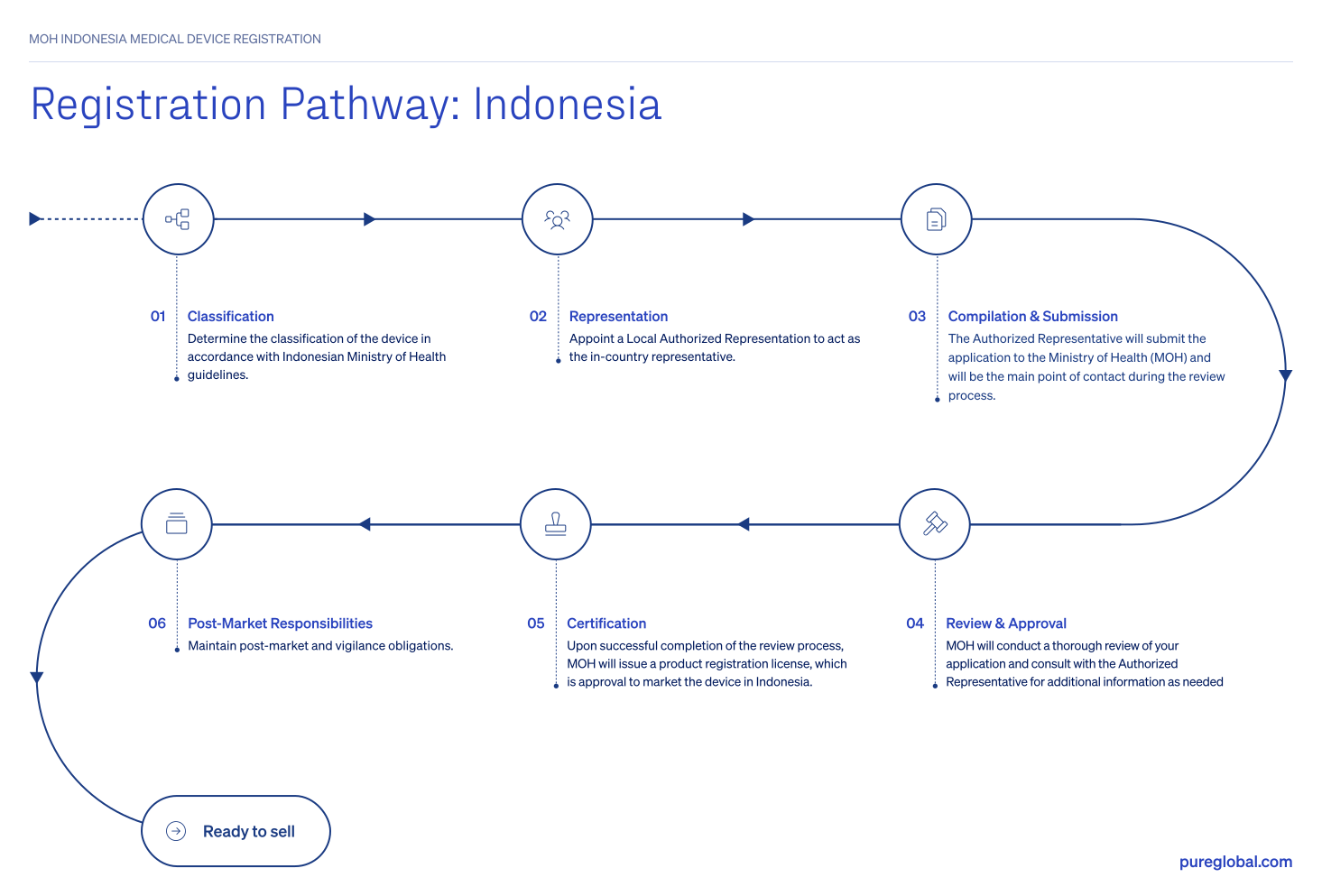
Faster submissions. Predictable costs. Local support.
We provide turnkey regulatory support in Indonesia, all for a flat annual fee:

Dossier preparation and submission, powered by AI assisted workflows and regulatory experts.
In country representation, with Pure Global serving as your Local Authorized Representative.
Post market surveillance support, including vigilance reporting and authority communications.
Importer authorizations, post approval modifications, and renewals.

Frequently asked questions
The Ministry of Health Indonesia (MOH) is the regulatory authority responsible for the registration of medical devices in Indonesia. They oversee the compliance and approval processes necessary for market access.
Indonesia charges government fees for medical device registration based on device risk classification. Fees are assessed per product.
Registration fees are as follows:
Class A: IDR 1,500,000 (approximately USD 89) per product
Class B: IDR 3,000,000 (approximately USD 177) per product
Class C: IDR 3,000,000 (approximately USD 177) per product
Class D: IDR 5,000,000 (approximately USD 296) per product
These fees do not include consulting services, dossier preparation, translations, local registration holder services, or regulatory representation. Additional fees may apply depending on the regulatory pathway, and government fees are subject to change without notice.
Check our Fee Calculator for up-to-date government fees in 14 markets.
Foreign manufacturers must appoint an importer as their local representative. This representative is responsible for holding the registration license and managing the importation process. Additionally, manufacturers must compile and submit a comprehensive technical dossier for MOH evaluation, with the complexity of this process varying depending on the device's risk class under Indonesia medical device regulations.
Pure Global offers flat-fee annual pricing for bundled medical device and IVD registration and representation in Indonesia, starting at $2,000/year. The flat fee includes dossier preparation and submission, in-country representation, translation, modifications, distributor authorization, and post-market support. The fee does not include government fees, certified translations, or translations from languages other than English. Importation activities are also quoted separately depending on import values and import frequency.
Flat fee structure for medical devices and IVDs:
1 device = $2,000/year
2-10 devices = additional $500 per device per year (e.g., 7 devices = $5,000/year)
Contact us for a custom quote if you have 11+ devices.
A three-year contract is required to lock in the fees quoted above. However, other contractual arrangements are available. Use our Fee Calculator for an instant estimate and more information about flat fee terms.
Single Process,
Multiple Markets
When you partner with Pure Global, a single registration process opens doors to multiple countries. Our global subsidiaries make this streamlined path possible.











Let's Talk,
Anywhere You Are.
Whether looking for more information or ready to partner with us, we're here to guide you through every step of the regulatory process.
Contact us