In Vitro Diagnostics Global Market Access 2026: The Year the Rules Moved in Opposite Directions
The EU inverted its IVD regime and the US reverted its own. This report rebuilds what that means for classification, timelines and cost from the registers themselves — including 238 IVDR certificates against 3,343 for devices, and the risk-class split across nine national registers.
TL;DR
Two things happened to in vitro diagnostics in the last eighteen months, and they point in opposite directions. Europe finished inverting its regime: under the old Directive roughly 8% of IVDs needed a notified-body certificate, and under the IVD Regulation roughly 78% do. The United States tried to extend its oversight to laboratory-developed tests and a federal court vacated the rule in its entirety in March 2025, with FDA formally reverting the regulation that September. If you sell a diagnostic across borders, your 2026 plan has to account for a Europe that has become far harder to enter and a United States that has become no harder at all.
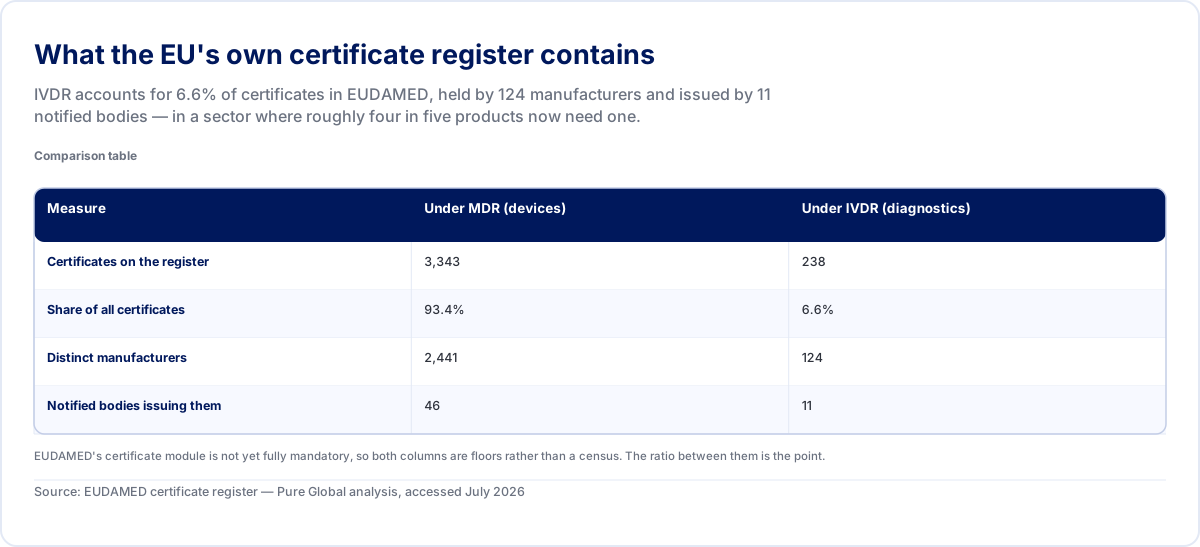
- The European bottleneck is measurable and severe. The EU's own certificate register carries 238 IVDR certificates against 3,343 MDR certificates — 6.6% of the total — held by 124 manufacturers and issued by 11 notified bodies, two of which issued 65% of them 1.
- The Class C clock has already rung once. Under the IVDR transition, Class C devices had to file with a notified body by 26 May 2026 and must have a signed written agreement by 26 September 2026 — about two months from the date of this report 2.
- The United States is the permissive outlier. Of FDA's 1,839 IVD product codes, 54% are 510(k)-exempt and 0.8% require a PMA. In the entire FDA record there are just 157 original IVD PMAs 34.
- The same test is a different class in every market, and we can now show it from the registers themselves. The share of registered IVDs sitting in each authority's top risk class runs from 0.8% in the United States to 52.2% in China, with Korea at 2.4%, Taiwan 3.0%, Brazil 7.0%, Singapore 11.1% and Colombia 16.8% 9.
- What it costs is knowable in advance. Government fees for a single IVD range from GBP 300 a year in the United Kingdom to CAD 30,169 for one Canadian near-patient Class III application; Pure Global's in-country representation is a flat $1,000–$3,000 a year depending on market and class 10.
This report is built from ten independent source types: FDA's classification, 510(k) and PMA databases; the EU's EUDAMED certificate register; China's national IVD registration record; the national device registers of 85 countries; the IVDR text itself; the US court and administrative record; and Pure Global's published price list. Every count is ours, computed from the primary record, and every limit on those counts is stated in section 6 rather than buried.
1. Two regimes, opposite directions
Takeaway: in the same eighteen months, Europe multiplied the share of IVDs needing third-party certification roughly tenfold, and a US court removed the FDA's attempt to widen its own net. Planning that assumes both markets are moving the same way is planning for a world that does not exist.
Europe: the inversion
The IVD Directive that governed Europe until 2022 worked on a list. A small set of high-risk tests — those on Annex II lists A and B, plus anything intended for self-testing — needed a notified body to certify them. Everything else, which is to say the overwhelming majority of diagnostics, the manufacturer certified itself.
The proportions are the part worth holding onto. Under the Directive, about 92% of IVDs required no notified-body certificate at all; certification touched roughly 8% of the market. Under the In Vitro Diagnostic Regulation, which replaced the Directive, the classification moved to a rule-based four-class scheme — A, B, C and D — in which only Class A non-sterile devices remain fully self-certifiable. The result is that about 78% of IVDs now need a certificate, and roughly 90% of products that were self-certified under the Directive must be re-certified under the Regulation 5.
That is not a tightening. It is an inversion. The default answer to "does someone else have to review this?" changed from no to yes for most of the sector.
How the four classes actually work
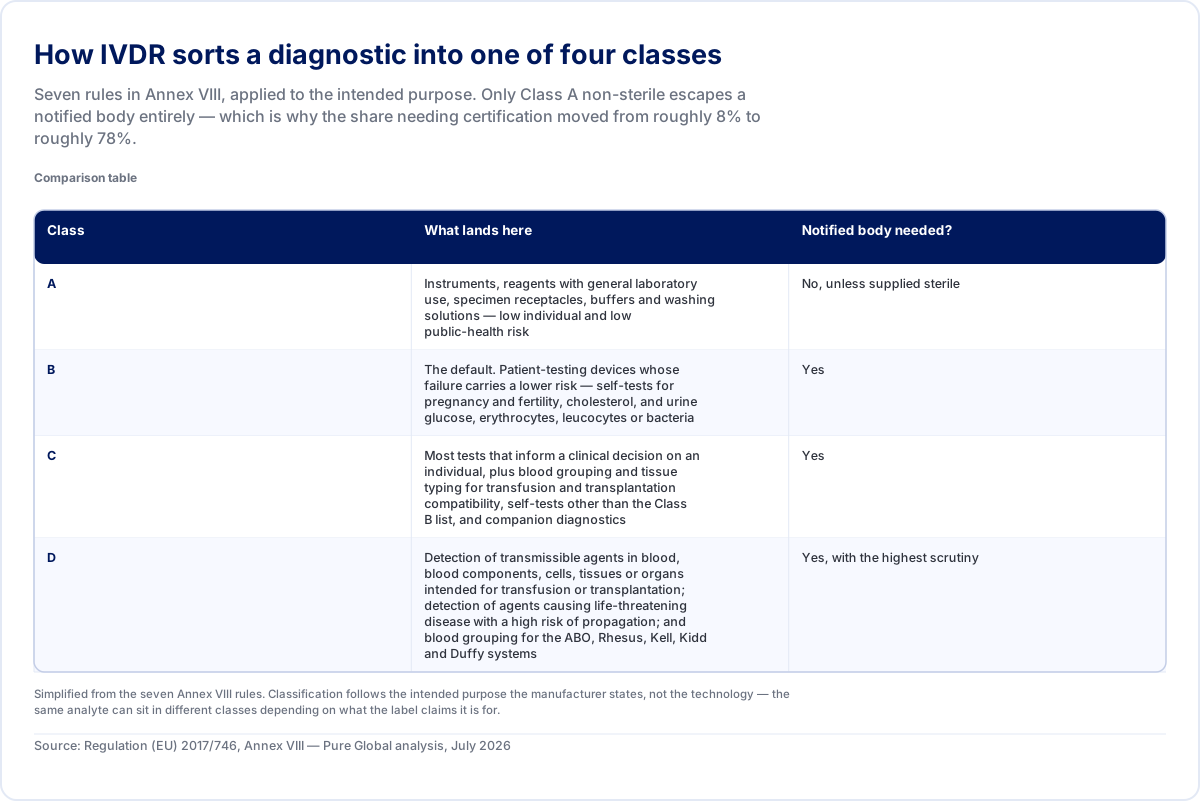
Because everything downstream in this report keys off class, it is worth setting out how a diagnostic lands in one. IVDR replaced the Directive's list with seven classification rules in Annex VIII, applied to the intended purpose the manufacturer states — not to the technology.
| Class | What lands here | Notified body needed? |
|---|---|---|
| A | Instruments, reagents with general laboratory use, specimen receptacles, buffers and washing solutions — low individual and low public-health risk | No, unless supplied sterile |
| B | The default. Patient-testing devices whose failure carries a lower risk — self-tests for pregnancy and fertility, cholesterol, and urine glucose, erythrocytes, leucocytes or bacteria | Yes |
| C | Most tests that inform a clinical decision on an individual, plus blood grouping and tissue typing for transfusion and transplantation compatibility, self-tests other than the Class B list, and companion diagnostics | Yes |
| D | Detection of transmissible agents in blood, blood components, cells, tissues or organs intended for transfusion or transplantation; detection of agents causing life-threatening disease with a high risk of propagation; and blood grouping for the ABO, Rhesus, Kell, Kidd and Duffy systems | Yes, with the highest scrutiny |
Simplified from the seven Annex VIII rules. Classification follows the intended purpose the manufacturer states, not the technology — the same analyte can sit in different classes depending on what the label claims it is for.
Source: Regulation (EU) 2017/746, Annex VIII — Pure Global analysis, July 2026
Two features of that scheme explain the 8%-to-78% shift on their own.
Class B is a residual category, and it is enormous. Rule 6 places in Class B everything not covered by the other rules. In a four-class scheme where the lowest class is reserved for instruments and buffers, "everything else that touches a patient sample" is a very large bucket — and it needs a notified body.
Classification follows the claim, not the chemistry. The same analyte can sit in different classes depending on what the label says the test is for. A test for a transmissible agent used to screen donated blood is Class D; a test for the same agent used to support a clinical diagnosis in a symptomatic patient may be Class C. Manufacturers who write an expansive intended purpose to maximise the commercial addressable market are, under IVDR, also choosing a higher class and a longer route.
The United States: the reversal
The American story ran the other way, and it ran through a courtroom.
On 6 May 2024 FDA issued a final rule amending the definition of "in vitro diagnostic products" at 21 CFR 809.3(a) to add five words — "including when the manufacturer of these products is a laboratory" — and set out a four-year phase-out of the enforcement discretion under which laboratory-developed tests had operated for decades. It was, in substance, an attempt to bring a very large volume of testing inside the device framework.
On 31 March 2025, Judge Sean D. Jordan of the US District Court for the Eastern District of Texas vacated that rule in its entirety, in the consolidated cases brought by the American Clinical Laboratory Association and the Association for Molecular Pathology. The court held that FDA lacks statutory authority over laboratory-developed tests, reasoning that Congress had created a separate scheme for laboratory testing in the Clinical Laboratory Improvement Amendments of 1988 and vested oversight in CMS rather than FDA. On 19 September 2025 FDA issued a final rule reverting the regulation to its pre-2024 text 6.
For a manufacturer, the practical consequence is narrow but real: the American regulatory perimeter for diagnostics is, as of today, where it was in early 2024.
Why the divergence matters commercially
It is tempting to read this as good news for anyone selling into the US and bad news for anyone selling into Europe, and at the level of paperwork that is roughly right. But the more useful reading is about sequencing.
For most of the last decade, the standard multi-market plan for a diagnostic was to obtain a CE mark first, because it was fast and self-declared for most products, and then use it as the reference approval for the many markets that recognise or rely on it. That plan is now inverted too. The CE route has become, for most classes, the slowest and most capacity-constrained of the major approvals — while the FDA route, for the 54% of product codes that are exempt and the 44.6% that need a 510(k), has not moved.
Everything in the rest of this report follows from that: what your test is classed as, what that class costs, how long it takes, and who has to hold the registration on your behalf.
2. The bottleneck, measured
the European constraint is not that the rules are strict. It is that the certification capacity to satisfy them does not yet exist at anything like the required scale — and the EU's own register shows exactly how far short it falls. Statements about the IVDR bottleneck are usually made in the abstract, or sourced to industry surveys. There is a better source: the European database on medical devices, EUDAMED, publishes the certificates that notified bodies have issued. We analysed the certificate register directly.
| Measure | Under MDR (devices) | Under IVDR (diagnostics) |
|---|---|---|
| Certificates on the register | 3,343 | 238 |
| Share of all certificates | 93.4% | 6.6% |
| Distinct manufacturers | 2,441 | 124 |
| Notified bodies issuing them | 46 | 11 |
EUDAMED's certificate module is not yet fully mandatory, so both columns are floors rather than a census. The ratio between them is the point.
Source: EUDAMED certificate register — Pure Global analysis, accessed July 2026
Source: EUDAMED certificate register — Pure Global analysis, July 2026 1.
Read the manufacturer row twice. 124 manufacturers hold IVDR certificates in the EU's register. That is the population that has completed the transition for at least one product — against 2,441 manufacturers holding certificates on the device side of the same register, for a sector that is not twenty times smaller than the device sector.
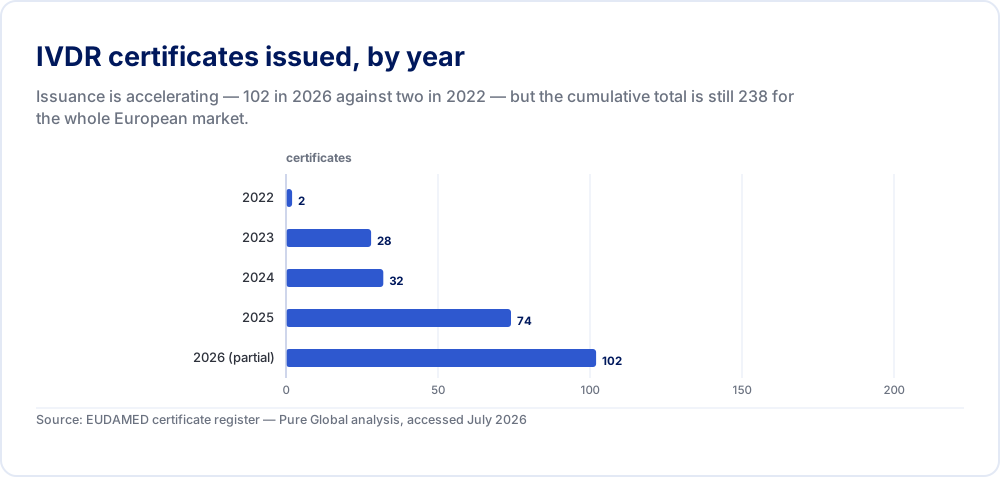
The issuance curve is genuinely improving, and the report should say so plainly rather than only sounding the alarm:
| IVDR certificates issued | |
|---|---|
| 2022 | 2 |
| 2023 | 28 |
| 2024 | 32 |
| 2025 | 74 |
| 2026 (partial) | 102 |
Source: EUDAMED certificate register — Pure Global analysis, accessed July 2026
Two certificates were issued in 2022, then 28, then 32, then 74, and 102 so far in 2026 1. Capacity is genuinely being built, and the trend is the right one — 2026 has already produced more certificates than any full year before it.
The problem is the starting point rather than the direction. Four years into the Regulation the cumulative total on the register is 238, held by 124 manufacturers. Whatever the true number of European IVD products requiring certification is — and no public figure we would stand behind exists — it is not 124 manufacturers' worth.
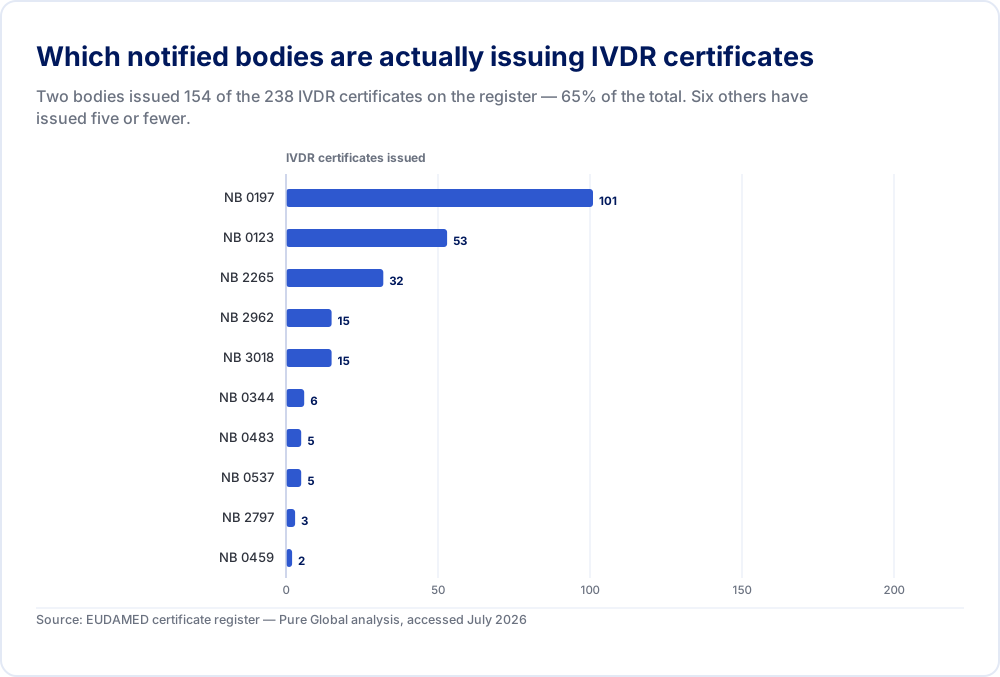
And the capacity that exists is concentrated in very few hands.
| IVDR certificates issued | |
|---|---|
| NB 0197 | 101 |
| NB 0123 | 53 |
| NB 2265 | 32 |
| NB 2962 | 15 |
| NB 3018 | 15 |
| NB 0344 | 6 |
| NB 0483 | 5 |
| NB 0537 | 5 |
| NB 2797 | 3 |
| NB 0459 | 2 |
Source: EUDAMED certificate register — Pure Global analysis, accessed July 2026
Of the eleven notified bodies that have issued an IVDR certificate, two account for 154 of the 238 — 65% 1. Six of the eleven have issued five or fewer. If your product sits with one of the busy two, you are in a queue behind most of the European market. If you approach one of the others, you are asking an organisation with a handful of IVDR certificates to its name to take on your file.
One honest caveat, stated here rather than in a footnote. EUDAMED's certificate module is not yet fully mandatory for all actors, so these are floors, not a census. Some certificates exist that are not on the register. That does not change the ratio between the MDR and IVDR columns, which were pulled from the same register on the same day under the same rules — and it is the ratio that carries the argument.
3. The clock
Takeaway: the IVDR transition is not a single deadline in the future. It is a staircase, and for Class C — the largest commercial bucket — the first step has already been taken and the second falls two months from now.
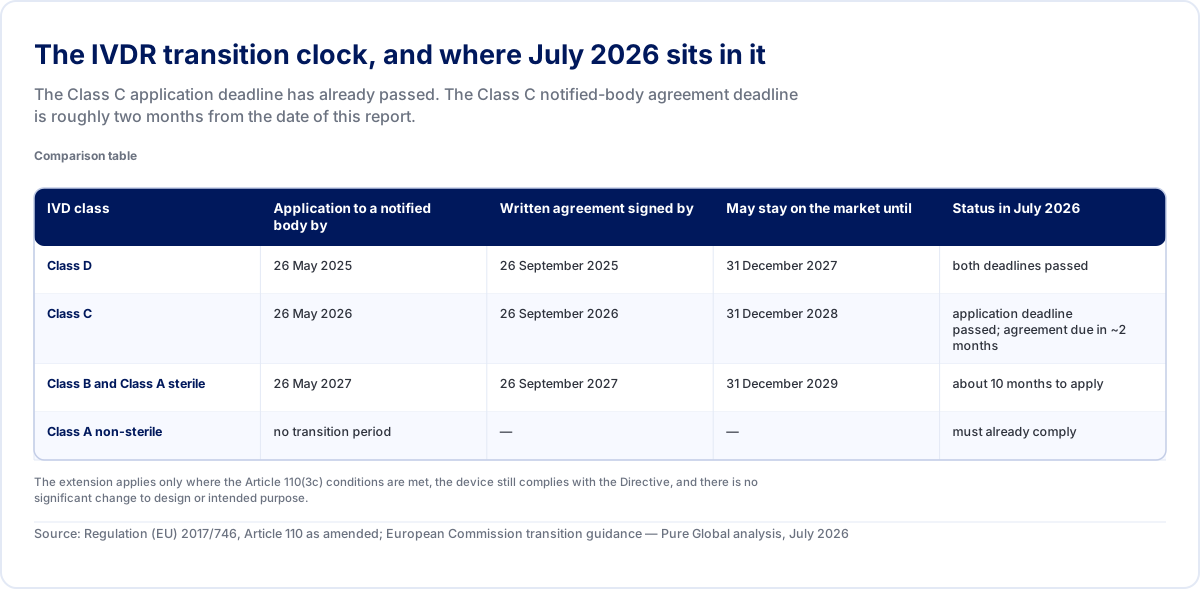
| IVD class | Application to a notified body by | Written agreement signed by | May stay on the market until | Status in July 2026 |
|---|---|---|---|---|
| Class D | 26 May 2025 | 26 September 2025 | 31 December 2027 | both deadlines passed |
| Class C | 26 May 2026 | 26 September 2026 | 31 December 2028 | application deadline passed; agreement due in ~2 months |
| Class B and Class A sterile | 26 May 2027 | 26 September 2027 | 31 December 2029 | about 10 months to apply |
| Class A non-sterile | no transition period | — | — | must already comply |
The extension applies only where the Article 110(3c) conditions are met, the device still complies with the Directive, and there is no significant change to design or intended purpose.
Source: Regulation (EU) 2017/746, Article 110 as amended; European Commission transition guidance — Pure Global analysis, July 2026
Source: Regulation (EU) 2017/746, Article 110 as amended 2.
Three points a planner needs from that table.
The extension is conditional, not automatic. It applies only where the conditions in Article 110(3c) are met, the device continues to comply with the Directive throughout, and there is no significant change to its design or intended purpose. A product that is redesigned mid-transition can lose the benefit of the extension it was relying on.
The market date is not the work date. "May stay on the market until 31 December 2028" is the date a Class C device without a certificate must come off. The date that governs whether you get there is the agreement deadline — 26 September 2026 — and the work of assembling a technical file to IVDR standard sits before that, not after.
Class A non-sterile has no transition at all. For the lowest-risk tier there was never a runway; those products had to comply from the date of application.
Where does that leave a manufacturer reading this in July 2026? If your product is Class C and you have not filed, the application deadline is behind you. If you have filed but not signed, you have roughly two months. If you are Class B or Class A sterile, you have about ten months to file — and, per section 2, you will be filing into a system that has issued 238 certificates in four years.
4. The permissive outlier
the United States classifies IVDs more permissively than any other major market. More than half of its IVD product codes need no premarket submission at all, and its top class is reserved almost entirely for tumour-marker assays. We took FDA's product classification catalogue — 7,075 codes in total — and isolated the five specialties that make up in vitro diagnostics: clinical chemistry, microbiology, hematology, immunology and pathology. That is 1,839 codes, 26.0% of the entire FDA catalogue 3.
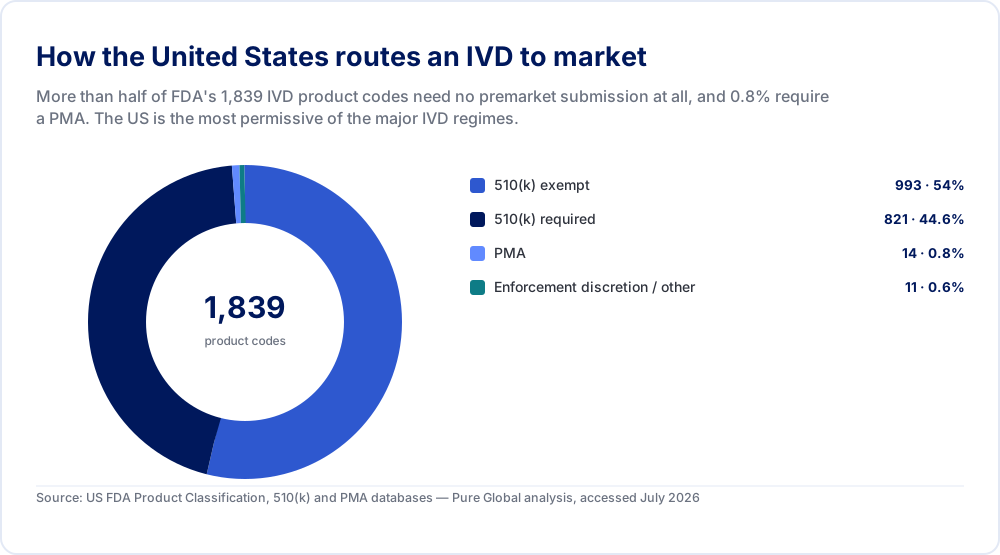
| product codes | |
|---|---|
| 510(k) exempt | 993 |
| 510(k) required | 821 |
| PMA | 14 |
| Enforcement discretion / other | 11 |
Source: US FDA Product Classification, 510(k) and PMA databases — Pure Global analysis, accessed July 2026
By risk class the split is 903 Class I (49.1%), 917 Class II (49.9%) and 14 Class III (0.8%) 3.
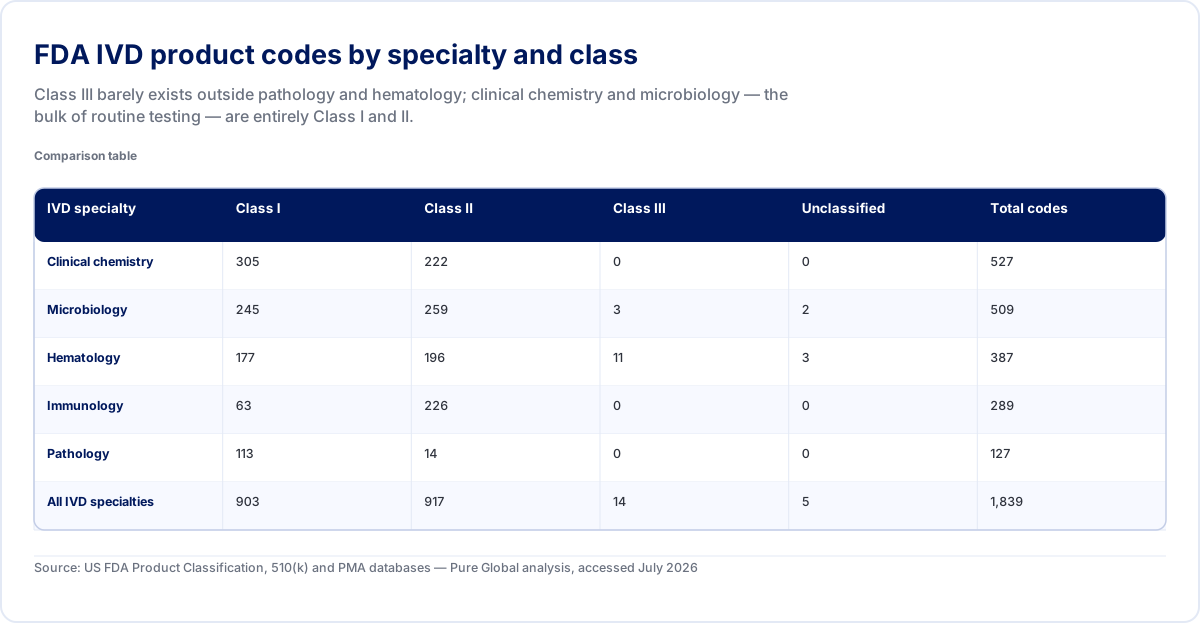
| IVD specialty | Class I | Class II | Class III | Unclassified | Total codes |
|---|---|---|---|---|---|
| Clinical chemistry | 305 | 222 | 0 | 0 | 527 |
| Microbiology | 245 | 259 | 3 | 2 | 509 |
| Hematology | 177 | 196 | 11 | 3 | 387 |
| Immunology | 63 | 226 | 0 | 0 | 289 |
| Pathology | 113 | 14 | 0 | 0 | 127 |
| All IVD specialties | 903 | 917 | 14 | 5 | 1,839 |
Source: US FDA Product Classification, 510(k) and PMA databases — Pure Global analysis, accessed July 2026
The specialty breakdown shows where the risk actually sits. Clinical chemistry — 527 codes, the workhorse of routine testing — contains no Class III codes at all. Neither does immunology, at 289 codes. Microbiology has three; hematology has eleven.
What the fourteen Class III codes actually are
This is the detail that tells you what the United States thinks is genuinely high-risk in diagnostics.
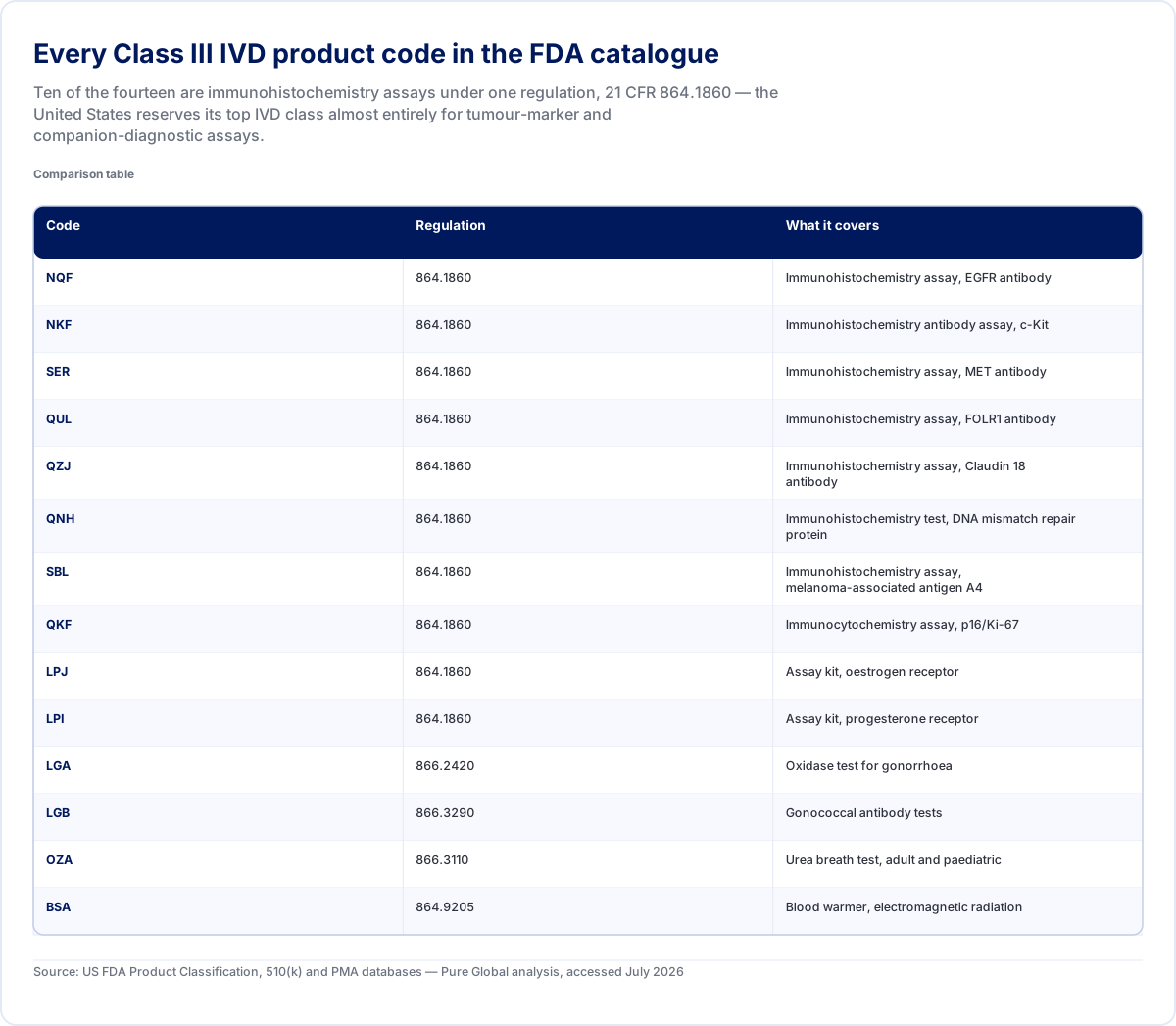
| Code | Regulation | What it covers |
|---|---|---|
| NQF | 864.1860 | Immunohistochemistry assay, EGFR antibody |
| NKF | 864.1860 | Immunohistochemistry antibody assay, c-Kit |
| SER | 864.1860 | Immunohistochemistry assay, MET antibody |
| QUL | 864.1860 | Immunohistochemistry assay, FOLR1 antibody |
| QZJ | 864.1860 | Immunohistochemistry assay, Claudin 18 antibody |
| QNH | 864.1860 | Immunohistochemistry test, DNA mismatch repair protein |
| SBL | 864.1860 | Immunohistochemistry assay, melanoma-associated antigen A4 |
| QKF | 864.1860 | Immunocytochemistry assay, p16/Ki-67 |
| LPJ | 864.1860 | Assay kit, oestrogen receptor |
| LPI | 864.1860 | Assay kit, progesterone receptor |
| LGA | 866.2420 | Oxidase test for gonorrhoea |
| LGB | 866.3290 | Gonococcal antibody tests |
| OZA | 866.3110 | Urea breath test, adult and paediatric |
| BSA | 864.9205 | Blood warmer, electromagnetic radiation |
Source: US FDA Product Classification, 510(k) and PMA databases — Pure Global analysis, accessed July 2026
Ten of the fourteen sit under a single regulation, 21 CFR 864.1860 — nine immunohistochemistry assays and one immunocytochemistry assay: EGFR, c-Kit, MET, FOLR1, Claudin 18, DNA mismatch repair protein, MAGE-A4, p16/Ki-67, and the oestrogen and progesterone receptor assay kits. The remaining four are two gonococcal tests, a urea breath test and a blood warmer 3.
In other words, the American Class III for diagnostics is, in practice, the companion-diagnostic and tumour-marker shelf. A test whose result selects a therapy is treated as high-risk. A test that measures glucose, or identifies an organism, or counts cells, is not.
The PMA route is vestigial
The numbers confirm it. The FDA PMA database returns 2,921 IVD-related rows, but only 157 of those are original PMAs — the other 2,764 are supplements to existing approvals. Original IVD PMAs are granted at a rate of between one and ten a year, and the applicant list is short: Abbott, DiaSorin, Roche, Siemens, Ortho-Clinical 4.
And the 510(k) route is stable
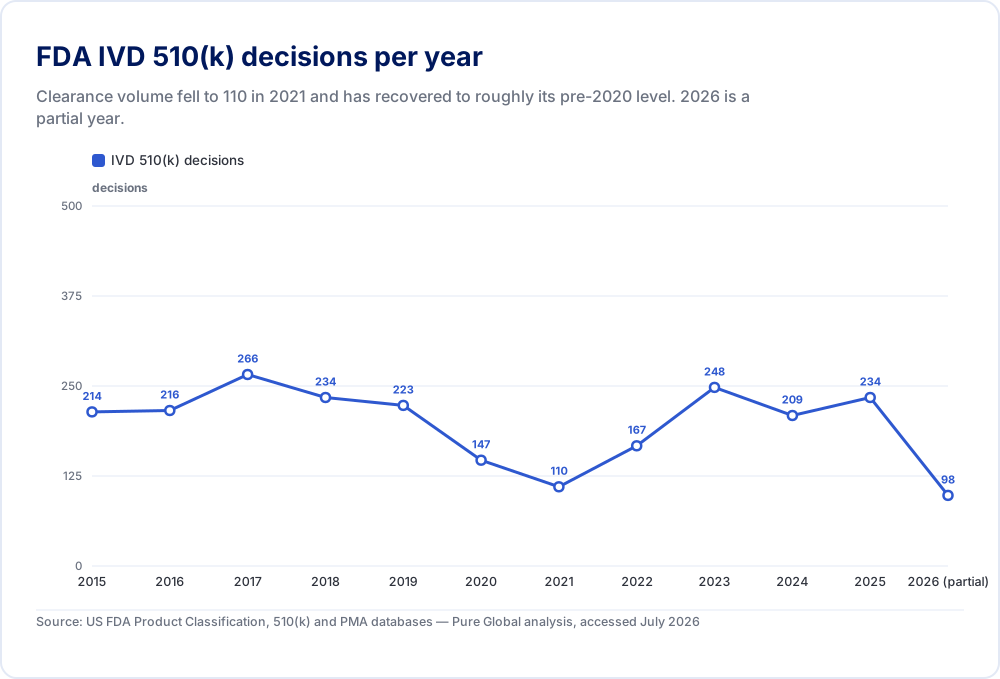
| IVD 510(k) decisions | |
|---|---|
| 2015 | 214 |
| 2016 | 216 |
| 2017 | 266 |
| 2018 | 234 |
| 2019 | 223 |
| 2020 | 147 |
| 2021 | 110 |
| 2022 | 167 |
| 2023 | 248 |
| 2024 | 209 |
| 2025 | 234 |
| 2026 (partial) | 98 |
Source: US FDA Product Classification, 510(k) and PMA databases — Pure Global analysis, accessed July 2026
FDA has issued 28,034 IVD 510(k) decisions in the life of the database. Annual volume ran 214–266 through the late 2010s, fell to 147 in 2020 and 110 in 2021, and recovered to 248 in 2023 and 234 in 2025 7.
The applicant mix is worth a line for anyone outside the United States. Across the whole record, 92.0% of IVD 510(k) applicants are US-based. But in the 2016–2026 window the picture is more open: US 69.6%, China 4.7%, the United Kingdom 3.7%, Germany 2.8%, Italy 2.5% and Taiwan 2.4% 7. The American diagnostics market is not closed to foreign manufacturers; it is simply that most of the people filing there are already there.
5. One test, nine taxonomies
risk class is the master variable in IVD market access — it sets the pathway, the fee, the timeline and the local obligations — and no two authorities compute it the same way. Here it is, calculated from nine national registers rather than asserted. Most market-access writing tells you that classification varies by country. Almost none of it shows you by how much, because doing so requires the registers themselves. We pulled them.
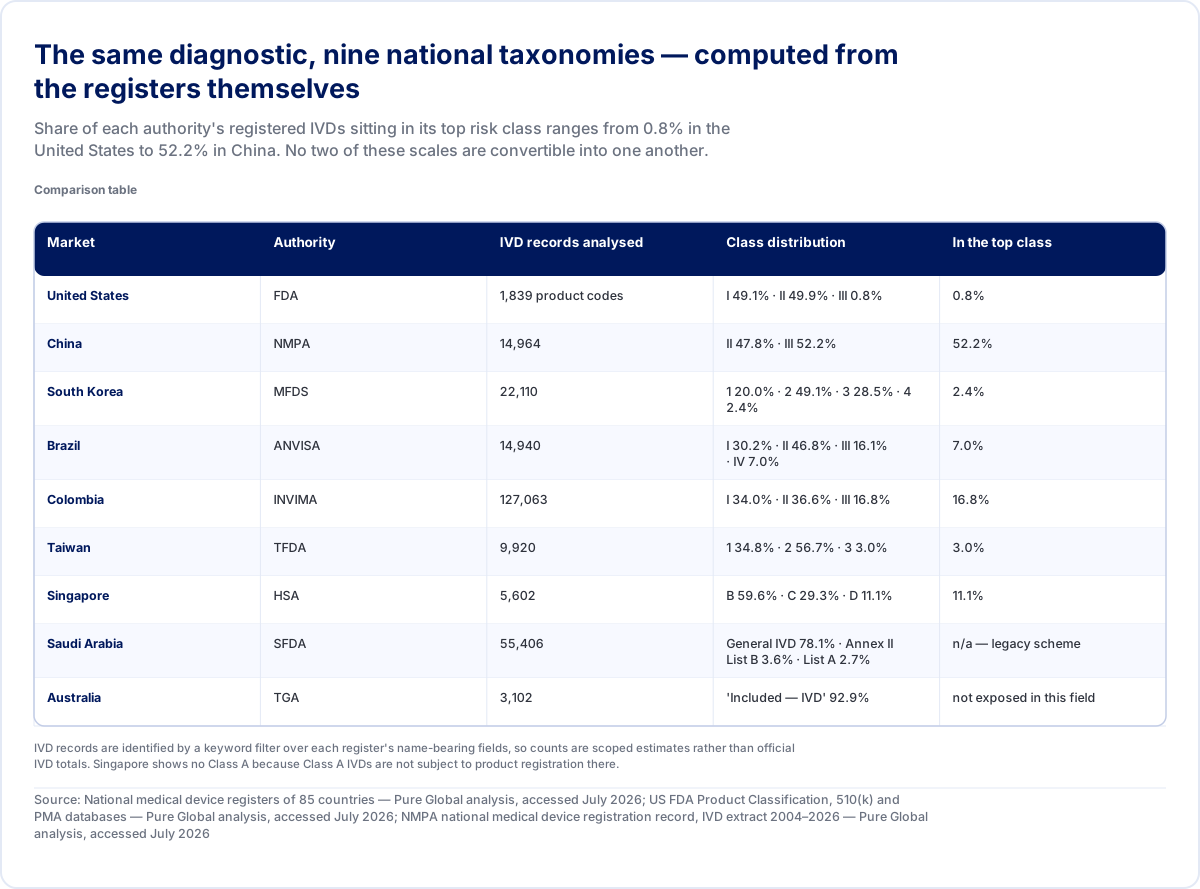
| Market | Authority | IVD records analysed | Class distribution | In the top class |
|---|---|---|---|---|
| United States | FDA | 1,839 product codes | I 49.1% · II 49.9% · III 0.8% | 0.8% |
| China | NMPA | 14,964 | II 47.8% · III 52.2% | 52.2% |
| South Korea | MFDS | 22,110 | 1 20.0% · 2 49.1% · 3 28.5% · 4 2.4% | 2.4% |
| Brazil | ANVISA | 14,940 | I 30.2% · II 46.8% · III 16.1% · IV 7.0% | 7.0% |
| Colombia | INVIMA | 127,063 | I 34.0% · II 36.6% · III 16.8% | 16.8% |
| Taiwan | TFDA | 9,920 | 1 34.8% · 2 56.7% · 3 3.0% | 3.0% |
| Singapore | HSA | 5,602 | B 59.6% · C 29.3% · D 11.1% | 11.1% |
| Saudi Arabia | SFDA | 55,406 | General IVD 78.1% · Annex II List B 3.6% · List A 2.7% | n/a — legacy scheme |
| Australia | TGA | 3,102 | 'Included — IVD' 92.9% | not exposed in this field |
IVD records are identified by a keyword filter over each register's name-bearing fields, so counts are scoped estimates rather than official IVD totals. Singapore shows no Class A because Class A IVDs are not subject to product registration there.
Source: National medical device registers of 85 countries — Pure Global analysis, accessed July 2026; US FDA Product Classification, 510(k) and PMA databases — Pure Global analysis, accessed July 2026; NMPA national medical device registration record, IVD extract 2004–2026 — Pure Global analysis, accessed July 2026
Source: national device registers — Pure Global analysis, July 2026 938.
Four things in that table are worth stopping on.
Saudi Arabia is still classifying IVDs on the scheme Europe abandoned. The SFDA register carries "Annex II List A" and "Annex II List B" categories — the taxonomy of the old IVD Directive — alongside a large "General IVD (Others)" bucket that holds 78.1% of its 55,406 IVD entries. A manufacturer transitioning its European file from Directive to Regulation is, in the Gulf, still describing its product in Directive language.
Singapore has no Class A IVDs on its register, and that is a fact rather than a gap. Class A IVDs are not subject to product registration in Singapore, so the register begins at Class B. Its distribution — B 59.6%, C 29.3%, D 11.1% — is the cleanest read in the table of how a four-class, rule-based scheme actually falls out in practice, and it is a reasonable proxy for what a manufacturer should expect under IVDR's equivalent rules.
China is the mirror image of the United States. 52.2% of its national IVD register sits in Class III against 0.8% in the American catalogue.
But the Chinese number needs unpacking, and this is where a naive reading goes wrong:
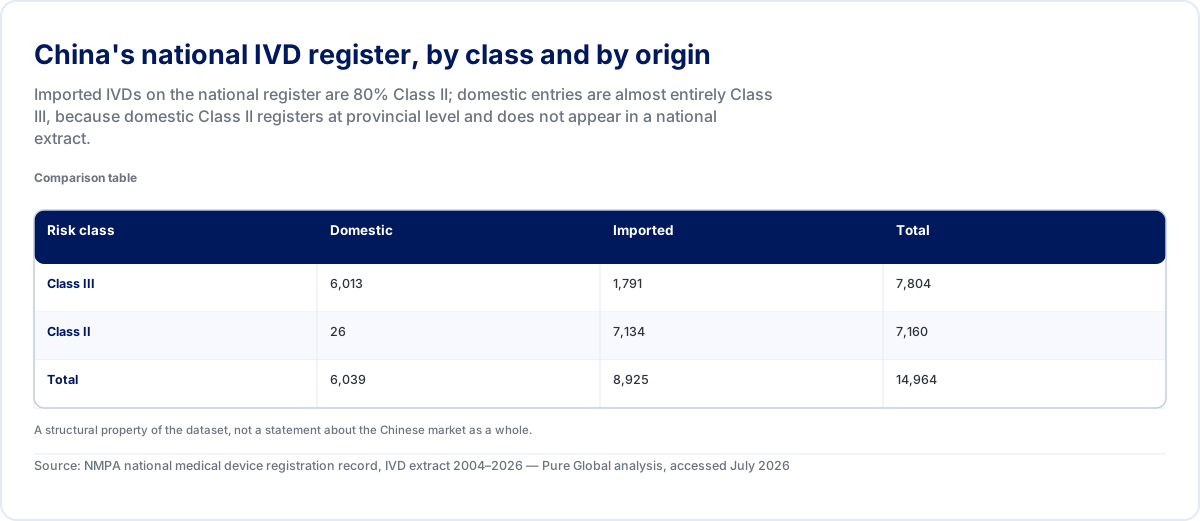
| Risk class | Domestic | Imported | Total |
|---|---|---|---|
| Class III | 6,013 | 1,791 | 7,804 |
| Class II | 26 | 7,134 | 7,160 |
| Total | 6,039 | 8,925 | 14,964 |
A structural property of the dataset, not a statement about the Chinese market as a whole.
Source: NMPA national medical device registration record, IVD extract 2004–2026 — Pure Global analysis, accessed July 2026
Source: NMPA national IVD registration extract 2004–2026 — Pure Global analysis 8.
Imported IVDs on China's national register are 80% Class II, not Class III. The reason domestic entries look so different is structural: domestic Class II devices register with provincial authorities, not nationally, so they barely appear in a national extract. This is a property of the dataset, not a statement that Chinese-made diagnostics are riskier than imported ones. For an importer the operative number is the import column — and it says the median imported diagnostic in China is a Class II product, registering nationally, with a type test and, depending on the product, local clinical data.
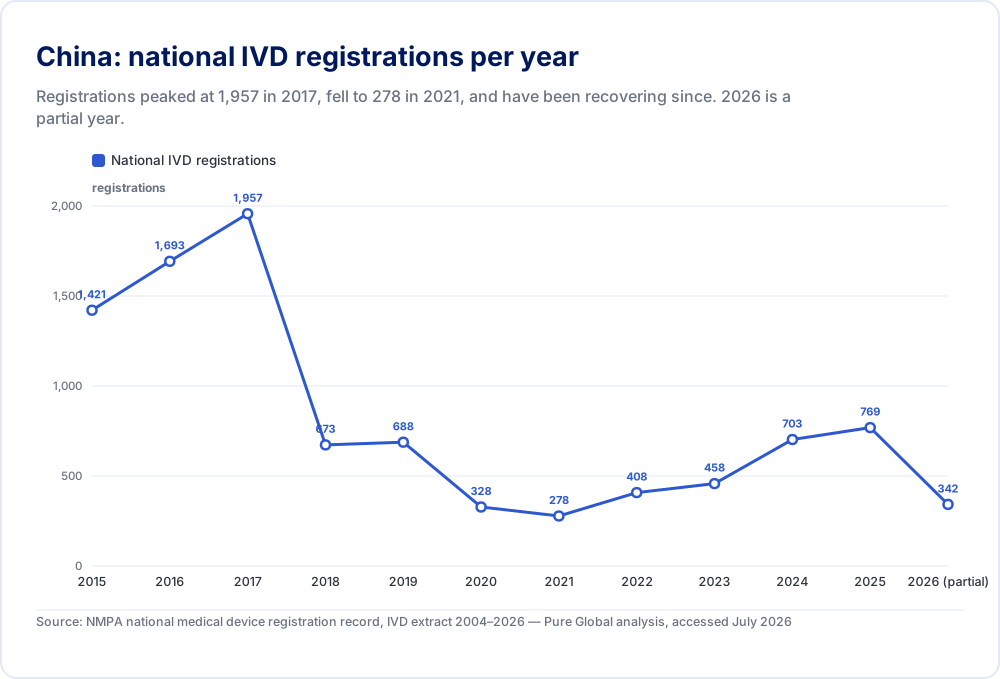
| National IVD registrations | |
|---|---|
| 2015 | 1,421 |
| 2016 | 1,693 |
| 2017 | 1,957 |
| 2018 | 673 |
| 2019 | 688 |
| 2020 | 328 |
| 2021 | 278 |
| 2022 | 408 |
| 2023 | 458 |
| 2024 | 703 |
| 2025 | 769 |
| 2026 (partial) | 342 |
Source: NMPA national medical device registration record, IVD extract 2004–2026 — Pure Global analysis, accessed July 2026
The Chinese time series is its own story: 1,957 registrations in 2017, a trough of 278 in 2021, and a recovery to 769 in 2025 8. Read it as a caution against extrapolating any single year of a registration series into a market trend; registration counts move with certificate renewal cycles and catalogue revisions as much as with commercial activity.
Who already holds the registrations
One more thing the registers show, which matters to anyone planning entry: the incumbent position is concentrated, and it is the same handful of names in market after market.
On China's national IVD register the largest holders are Roche Diagnostics with 738 registrations across two registered entities, Siemens Healthcare Diagnostics with 619 across three, Beckman Coulter with 200, Abbott with 254 across two, Tosoh with 127 and EUROIMMUN with 115. The largest Chinese-domiciled holders are considerably smaller — Autobio 186, Beier Bio 181, Mindray 108, Da An Gene 102 8.
The original-PMA list in the United States is the same story in a different jurisdiction: Abbott, DiaSorin, Roche, Siemens and Ortho-Clinical account for most of the 157 original IVD PMAs ever granted 4.
And in Europe, the 238 IVDR certificates are spread across 124 manufacturers 1 — against 2,441 manufacturers holding MDR certificates.
For a manufacturer entering rather than defending, the practical reading is not that these markets are closed. It is that the reference points a regulator is familiar with, and the predicates or comparators available to you, belong to a small group — and that the smaller your file, the more the class determination and the completeness of your technical documentation will decide your timeline, because you will not be waved through on familiarity.
The scale behind the table
| Registration records held | |
|---|---|
| Serbia | 1,526,193 |
| Moldova | 1,176,011 |
| Ecuador | 992,766 |
| Thailand | 453,302 |
| Colombia | 431,021 |
| South Korea | 273,672 |
| Japan | 270,831 |
| Switzerland | 183,080 |
| Saudi Arabia | 165,185 |
| Botswana | 156,648 |
| Malaysia | 147,873 |
| Guatemala | 131,045 |
| Brazil | 114,456 |
| Taiwan | 103,947 |
| Australia | 97,472 |
Source: National medical device registers of 85 countries — Pure Global analysis, accessed July 2026
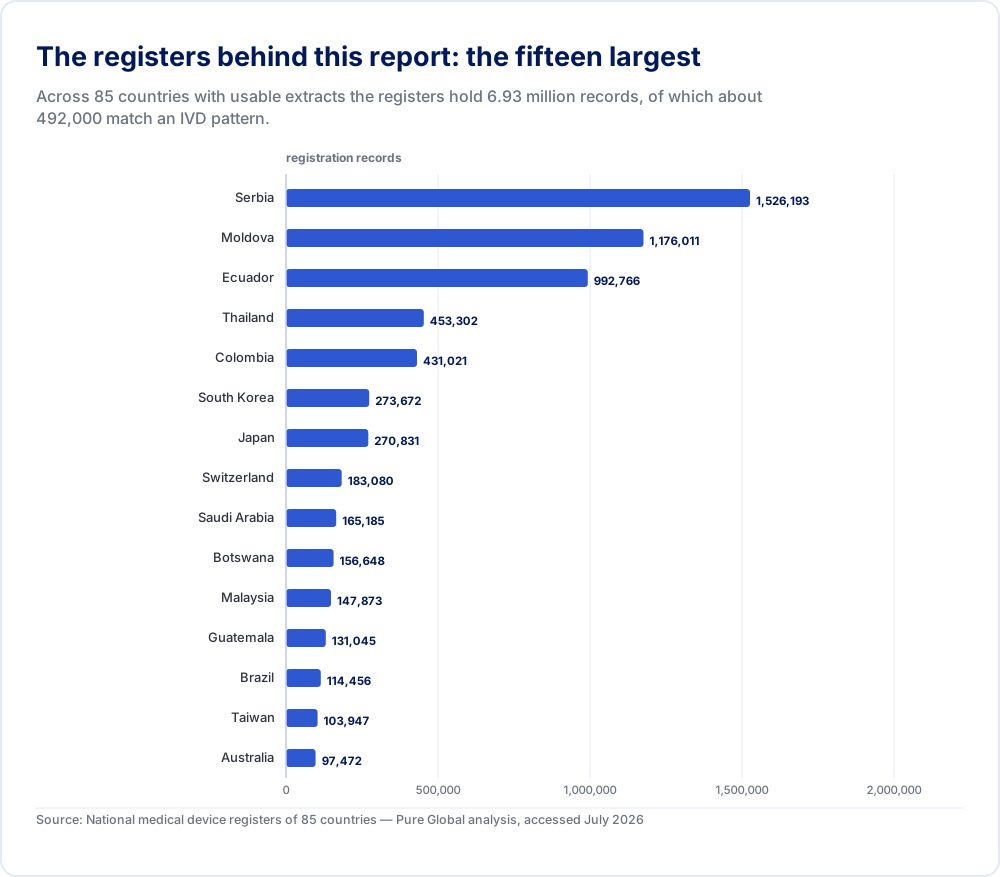
The nine markets above are the ones whose registers expose a usable class field. The underlying evidence base is much larger: 85 countries with usable national registration extracts, 6,934,571 records in total, of which 492,013 match an IVD pattern 9. The largest registers are not the ones you would guess — Serbia at 1.53 million records, Moldova at 1.18 million and Ecuador at 993,000 all exceed Brazil, Taiwan and Australia.
What the register landscape itself tells you
There is a second, less obvious finding in the inventory: how a country publishes its register is itself market intelligence.
Of the countries we hold data for, the picture falls into three tiers.
Markets with a full, searchable product register. Brazil, Korea, Taiwan, Singapore, Colombia, Saudi Arabia, Australia, Malaysia, Thailand and around seventy others publish product-level registration records — registrant, product name, class, and often validity dates. In these markets you can check, before you commit, whether a competitor is already registered, what class they achieved, and who holds the registration for them. That is a real planning advantage and it is free.
Markets that publish establishments rather than products. Several registers in our set list importers, wholesalers, distributors or licence holders rather than the devices themselves — the entries are companies, not products. You can learn who is authorised to import into that market, which is useful for partner selection, but you cannot see whether your product category is already registered.
Markets with no public product register we could obtain. For nineteen countries in our inventory we found no usable product-level registration extract at all — in several cases because what exists is a distributor list, in others because the register is not published in a retrievable form. For a market-entry plan this is the tier that costs money: you cannot verify a competitor's position, you cannot confirm a class precedent, and you are relying entirely on your local representative's word for what the authority will require.
The practical use of this is in sequencing. Where a register is open, do the competitive check before you pay for a regulatory opinion — an hour in the register frequently answers the question the opinion was going to charge for. Where it is closed, budget for the opinion, because there is no cheaper substitute.
6. What the registers cannot tell you
every number in section 5 is a scoped estimate from a specific extract on a specific date. Here is exactly where each one stops being reliable. IVD identification is a keyword filter, not an official flag. Most national registers do not carry a machine-readable "this is an IVD" field. We matched on name-bearing columns using diagnostic terminology in the relevant languages. That produces a scoped estimate: it will miss products whose registered name does not signal diagnosis, and it will occasionally catch a device that is not an IVD. Treat the counts as orders of magnitude and the distributions as indicative shapes.
Class labels are not convertible. Brazil's Class IV, Singapore's Class D, Korea's Grade 4 and China's Class III are each defined by their own rules. A test at the top of one scale is not necessarily at the top of another, and the "in the top class" column compares how much of each register sits at its own summit, not the products themselves.
Registers are stocks, not flows. A register holds what is currently or historically registered, subject to each authority's own purging practice. Comparing register sizes across countries measures database practice as much as market size.
Japan is missing from the table on purpose. The Japanese extract we hold contains 270,831 approval records but does not label IVDs in a way our filter can read — it returns 126 matches, which is obviously wrong. Rather than publish a number we do not believe, we left Japan out.
EUDAMED is a floor. Stated in section 2 and repeated here because it matters: certificate registration is not yet fully mandatory.
Government fees are quoted from a price list, not re-verified against each authority. The figures in section 7 come from Pure Global's own commercial price list, which tracks these fees for the markets it operates in. They should be re-confirmed against the authority's current schedule before they go into a budget.
7. What entry costs
Takeaway: the cost of an IVD registration is driven almost entirely by risk class, and the steps between classes are far larger than most first-time planners expect. Here are the government fees, and here is what we charge.
The government's share
| Market | Fee item | Amount |
|---|---|---|
| United States | Annual establishment registration (FY2026 MDUFA) | $11,423 |
| United States | 510(k) review — standard | $26,067 |
| United States | 510(k) review — qualified small business | $6,517 |
| United States | De Novo — standard / small business | $173,782 / $43,446 |
| Canada | IVD application — Class II | CAD 643 |
| Canada | IVD application — Class III | CAD 14,163 |
| Canada | IVD application — Class III, near patient | CAD 30,169 |
| Canada | IVD application — Class IV | CAD 30,713 |
| Australia | IVD ARTG listing, annual, all classes | AUD 948 |
| Australia | IVD application assessment | AUD 1,244 |
| Australia | IVD application audit — Class 1–2 / 3–4 | AUD 8,364 / AUD 16,077–25,350 |
| Brazil | ANVISA notification — Class I–II | BRL 1,405.73 |
| Brazil | ANVISA registration — Class III–IV (small/medium family) | BRL 8,509.92 |
| Brazil | ANVISA registration — Class III–IV (large family) | BRL 19,856.48 |
| Colombia | INVIMA assessment — Class I / II / III | COP 2,570,590 / 2,570,590 / 3,427,327 |
| Indonesia | MoH registration — A / B / C / D | IDR 1.5m / 3m / 3m / 5m |
| Malaysia | MDA application — A / B / C / D | MYR 750 / 1,000 / 2,000 / 3,000 |
| United Kingdom | MHRA IVD registration, all classes | GBP 300 annual |
Government fees are quoted from the Pure Global Master Price List and should be re-confirmed against each authority's current schedule before budgeting.
Source: Pure Global Master Price List v2.0, 29 June 2026
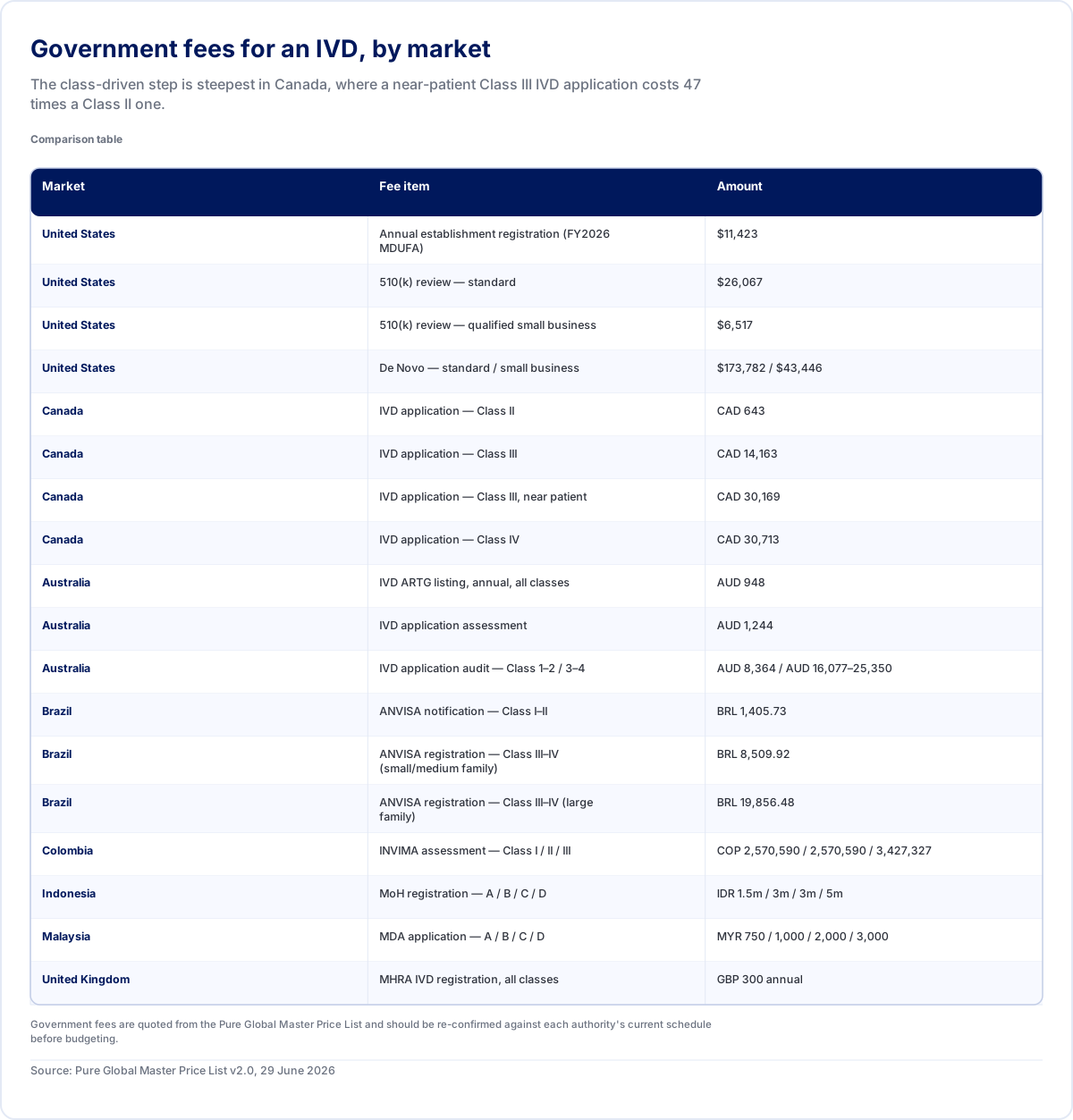
A selection from the markets Pure Global operates in. The US figures are the FY2026 MDUFA rates, which apply from 1 October 2025 to 30 September 2026 and are set out in the Federal Register 9; the rest are as carried in our price list 10.
Two observations for anyone building a budget.
The class step is the whole game. In Canada a Class II IVD application costs CAD 643 and a near-patient Class III costs CAD 30,169 — a factor of forty-seven for the same regulatory act on a different risk tier. In Brazil the step from a Class I–II notification to a large-family Class III–IV registration is roughly fourteen-fold.
The headline fee is rarely the whole fee. Australia's IVD assessment is AUD 1,244, but an application audit — which the TGA may require — is AUD 8,364 at the lower classes and up to AUD 25,350 at Class 3–4. The United States charges $11,423 a year for establishment registration whether or not you file anything, with no small-business reduction on that particular fee.
One caveat on the table itself. We verified the US line against the Federal Register rate notice for FY2026 9. The remaining figures are carried from our own price list, which tracks them for the markets we operate in, and they should be re-confirmed against each authority's current schedule before they enter a budget. Fee schedules in this field are revised annually and several of these markets adjust in local currency.
Our share, published
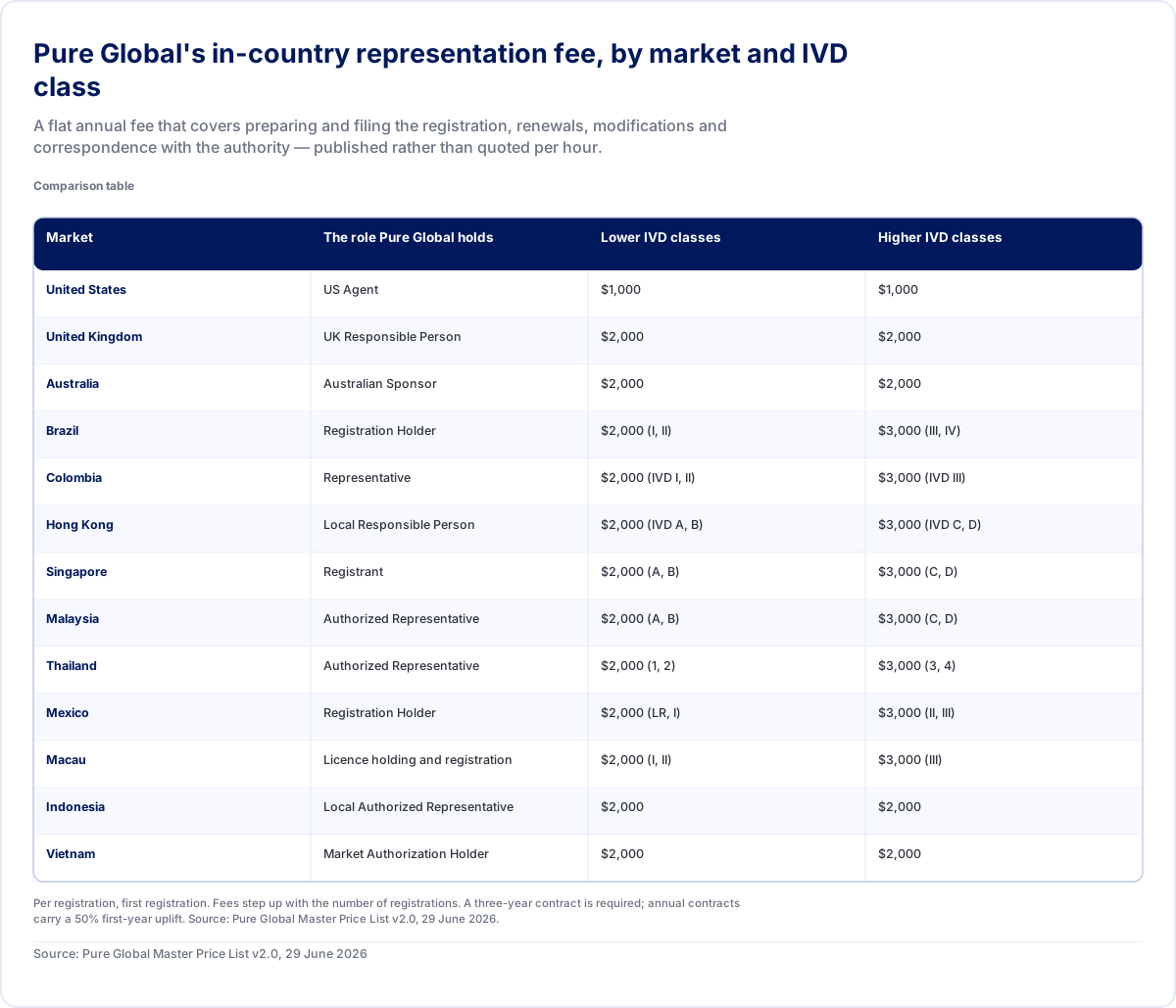
Most regulatory consultancies bill by the hour and will not put a number on a page. We publish ours.
| Market | The role Pure Global holds | Lower IVD classes | Higher IVD classes |
|---|---|---|---|
| United States | US Agent | $1,000 | $1,000 |
| United Kingdom | UK Responsible Person | $2,000 | $2,000 |
| Australia | Australian Sponsor | $2,000 | $2,000 |
| Brazil | Registration Holder | $2,000 (I, II) | $3,000 (III, IV) |
| Colombia | Representative | $2,000 (IVD I, II) | $3,000 (IVD III) |
| Hong Kong | Local Responsible Person | $2,000 (IVD A, B) | $3,000 (IVD C, D) |
| Singapore | Registrant | $2,000 (A, B) | $3,000 (C, D) |
| Malaysia | Authorized Representative | $2,000 (A, B) | $3,000 (C, D) |
| Thailand | Authorized Representative | $2,000 (1, 2) | $3,000 (3, 4) |
| Mexico | Registration Holder | $2,000 (LR, I) | $3,000 (II, III) |
| Macau | Licence holding and registration | $2,000 (I, II) | $3,000 (III) |
| Indonesia | Local Authorized Representative | $2,000 | $2,000 |
| Vietnam | Market Authorization Holder | $2,000 | $2,000 |
Per registration, first registration. Fees step up with the number of registrations. A three-year contract is required; annual contracts carry a 50% first-year uplift. Source: Pure Global Master Price List v2.0, 29 June 2026.
Source: Pure Global Master Price List v2.0, 29 June 2026
Source: Pure Global Master Price List v2.0, 29 June 2026 10. Per registration, first registration. The current published schedule is at pureglobal.com/services/pricing.
The annual fee includes preparing and submitting the registration, renewals, modifications, required translations and UDI submissions where applicable, and correspondence with the authority. Fees step up with the number of registrations — in Australia $2,000 for one and $4,000 for five; in Brazil $2,000 for one notification and $8,500 for ten. A three-year contract is required, and annual contracts carry a 50% uplift in the first year.
One-time work is priced separately: 510(k) compilation and submission $15,000–$20,000; regulatory pathway determination $5,000; pre-submission (Q-Sub) support $10,000–$15,000 10.
A worked example
| Market | IVD class in that market | Local role legally required | Pure Global annual fee |
|---|---|---|---|
| United States | Class II (510(k)) | US Agent | $1,000 |
| Brazil | Class III | Registration Holder | $3,000 |
| Singapore | Class C | Registrant | $3,000 |
| Australia | Class 3 | Australian Sponsor | $2,000 |
| Total | — | — | $9,000 per year, flat |
Government fees, testing and any notified-body or local-clinical requirements are additional and vary by market.
Source: Pure Global Master Price List v2.0, 29 June 2026
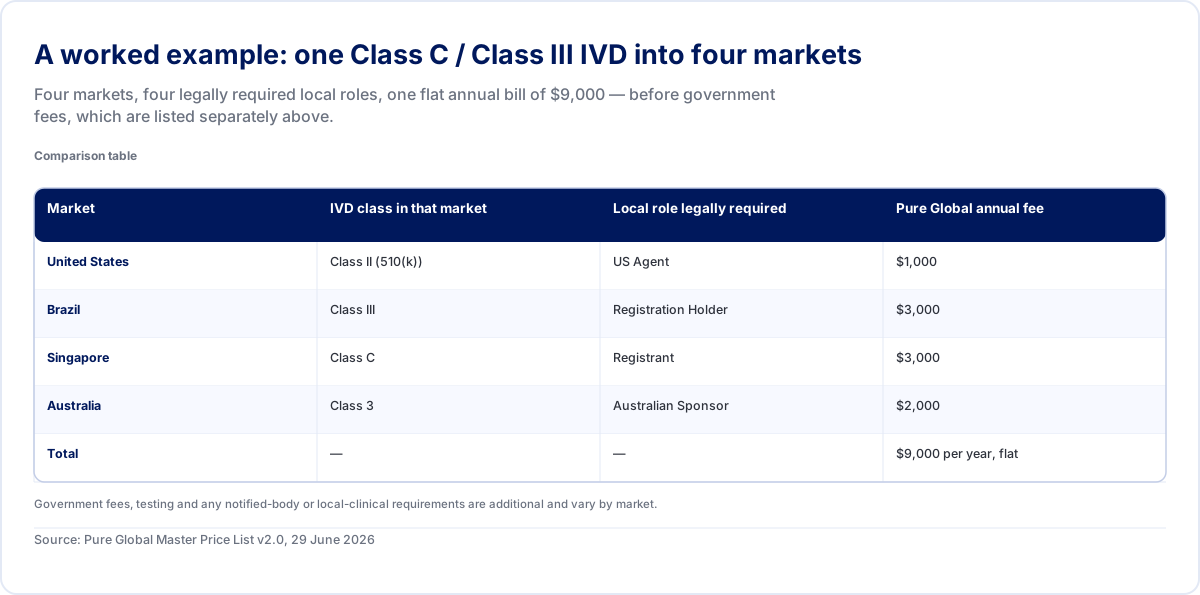
One diagnostic, entering four markets, at the class each market assigns it:
Government fees, testing, and any notified-body or local-clinical requirements are additional.
8. Who has to be you
in almost every market outside your own, someone resident there must hold your registration and answer to the regulator for it. That role is not administrative — it carries legal responsibility — and choosing it badly is how manufacturers lose control of their own product registrations. Look again at the middle column of the worked example. In the United States you need a US Agent. In Brazil a Registration Holder. In Singapore a Registrant. In Australia a Sponsor. In Hong Kong a Local Responsible Person; in Malaysia and Thailand an Authorized Representative; in Vietnam a Market Authorization Holder.
These are not the same job with different names. What they share is that the entity holding the role is the one the authority deals with, and in several markets the one legally answerable for the product.
Two failure modes recur, and both are expensive.
Letting your distributor hold the registration. It is the path of least resistance — the distributor is already there, already has the entity, and often offers to do it free. The problem surfaces when you want to change distributor, because in many markets the registration belongs to the holder, not the manufacturer. Changing it means re-registering, at full cost and full timeline, while your competitor sells.
Treating the role as a mailbox. In markets where the representative carries legal liability, an entity that cannot actually respond to an authority's questions about your technical file is a risk to your registration, not a convenience.
The reason we price this role as a flat annual fee rather than an hourly engagement is that it is a standing obligation, not a project. The registration has to be renewed, modifications have to be filed, and the authority writes when it writes.
9. What to do in the next twelve months
the sequencing that worked for the last decade — CE first, then everything else — is the wrong sequence in 2026. If you have a Class C product in the European transition, the agreement deadline of 26 September 2026 governs everything else you do this quarter. Confirm in writing which notified body holds your application and whether the written agreement is signed. If it is not, that is the only regulatory task that matters this month.
Stop treating the CE mark as the natural first approval. For most classes it is now the slowest route in the set, constrained by a capacity that has issued 238 certificates in four years. Markets that recognise or rely on an FDA clearance, or that assess on their own file, may be faster to enter and can fund the European work.
Get your classification determined per market before you budget. Section 5 is the argument for this: the same test can be 510(k)-exempt in the United States and Class C in Singapore. Class drives fee, pathway, evidence and the local role. A budget built on one market's class is wrong everywhere else.
Decide who holds your registrations before you appoint distributors, not after. Section 8 is the argument for that one.
Re-verify every government fee before it enters a plan. Ours are current to the price list; authorities change them.
A sequence that fits 2026
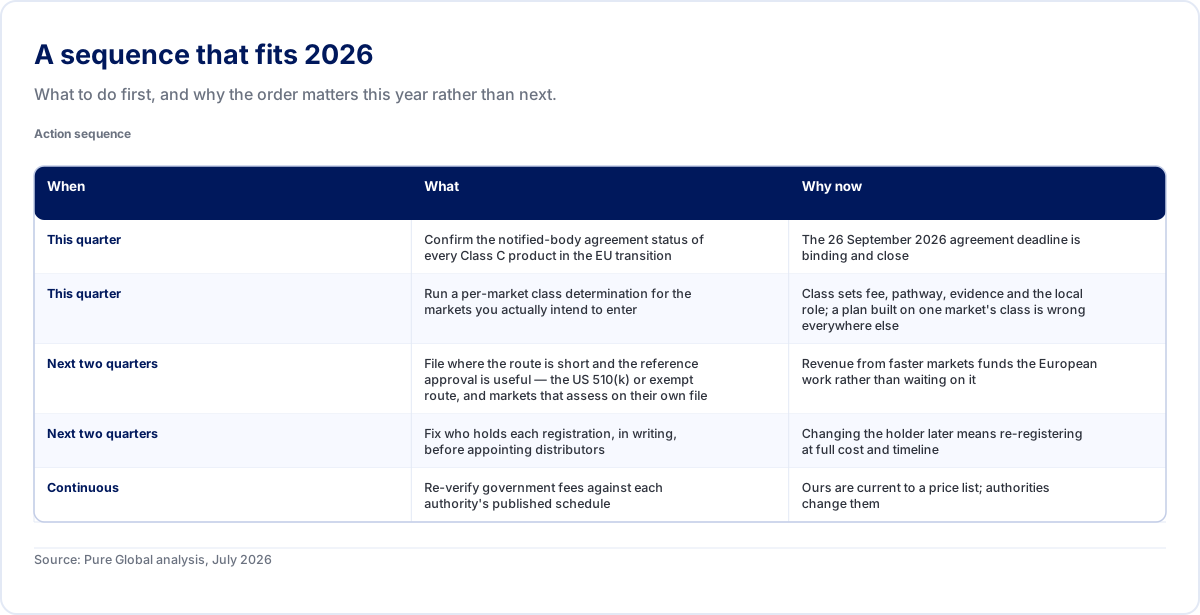
| When | What | Why now |
|---|---|---|
| This quarter | Confirm the notified-body agreement status of every Class C product in the EU transition | The 26 September 2026 agreement deadline is binding and close |
| This quarter | Run a per-market class determination for the markets you actually intend to enter | Class sets fee, pathway, evidence and the local role; a plan built on one market's class is wrong everywhere else |
| Next two quarters | File where the route is short and the reference approval is useful — the US 510(k) or exempt route, and markets that assess on their own file | Revenue from faster markets funds the European work rather than waiting on it |
| Next two quarters | Fix who holds each registration, in writing, before appointing distributors | Changing the holder later means re-registering at full cost and timeline |
| Continuous | Re-verify government fees against each authority's published schedule | Ours are current to a price list; authorities change them |
Source: Pure Global analysis, July 2026
If it is useful, we will do the classification determination market by market and tell you what each will cost and how long it will take — including the markets where our answer is that you do not need us. Our published fees are at pureglobal.com/services/pricing.
References
- https://ec.europa.eu/tools/eudamed ec.europa.eu ↩ ↩ ↩ ↩ ↩
- https://eur-lex.europa.eu/eli/reg/2017/746/oj eur-lex.europa.eu ↩ ↩
- https://www.accessdata.fda.gov/scripts/cdrh/cfdocs/cfPCD/classification.cfm accessdata.fda.gov ↩ ↩ ↩ ↩ ↩
- https://www.accessdata.fda.gov/scripts/cdrh/cfdocs/cfpma/pma.cfm accessdata.fda.gov ↩ ↩ ↩
- https://www.medtecheurope.org/ medtecheurope.org ↩
- https://www.fda.gov/medical-devices/in-vitro-diagnostics/laboratory-developed-tests fda.gov ↩
- https://www.accessdata.fda.gov/scripts/cdrh/cfdocs/cfpmn/pmn.cfm accessdata.fda.gov ↩ ↩
- https://www.nmpa.gov.cn/datasearch/home-index.html nmpa.gov.cn ↩ ↩ ↩ ↩
- https://www.federalregister.gov/documents/2025/07/30/2025-14412/medical-device-user-fee-rates-for-fiscal-year-2026 federalregister.gov ↩ ↩
 Market · Oct 15, 2026FDA US Medical Device RegistrationMarket · Oct 15, 2026EU Medical Device Classification & Regulation (MDR/IVDR)Market · Oct 15, 2026NMPA China Medical Device Registration & ApprovalCase Study · Aug 11, 2026Basic UDI-DI Grouping for Contrast DevicesCase Study · Aug 11, 2026Class III Dermal Fillers Under the EU MDRDevice Type · Oct 14, 2026IVD Regulation: FDA, EU IVDR & Global Registration GuideRegulatory Update · Oct 20, 2026Singapore HSA Integration and HTA ScopeRegulatory Update · Oct 17, 2026FDA Toxicology 510(k) ExemptionsRegulatory Update · Oct 17, 2026TFDA Clinical Trial E-SubmissionsRegulatory Update · Oct 17, 2026TGA Digital Scribes
Team-NB MDR Documentation: Submission Completeness Checks (2026)
Interpret Team-NB’s notified-body completeness survey correctly and turn MDR technical-documentation guidance into a scoped evidence and submission check.
21 CFR Part 820 to ISO 13485: The QMSR Crosswalk
QMSR cut 21 CFR Part 820 from 31 sections to six and made ISO 13485:2016 the rule. This crosswalk maps every old section to its ISO 13485 clause, marks which mappings FDA stated, lists the FDA-only requirements and shows where a decade of 483 citations now lands.
FDA Cleared vs Approved vs Granted: 510(k), PMA and De Novo
In 2025 FDA cleared 3,198 devices through 510(k), granted 27 De Novo requests and approved 38 original PMAs. This guide explains what each word means legally, how long each route takes, what it costs in FY2027 and how to describe your device's status without misbranding it.
Let's Talk,
Anywhere You Are.
Whether looking for more information or ready to partner with us, we're here to guide you through every step of the regulatory process.
Contact us